Why battery safety intelligence is becoming critical for modern defense
The global drone market is expanding rapidly — but one of the biggest challenges is no longer the drone
itself.
It is the battery supply chain and battery safety.
For years, battery procurement was mainly about energy density, performance, and cost. Today,
geopolitical risk and supply chain transparency are becoming equally important,
especially within defense and critical infrastructure.
New U.S. defense regulations now restrict batteries linked to so-called “Foreign Entities of
Concern,” particularly China. The rules do not only apply to the finished
battery cell, but also to core components such as cathodes, anodes,
electrolytes, separators, and even battery management systems.
 This represents a major shift in how batteries are viewed.
A battery may perform well technically, but still become unusable for defense procurement if its
material origin cannot be fully documented.
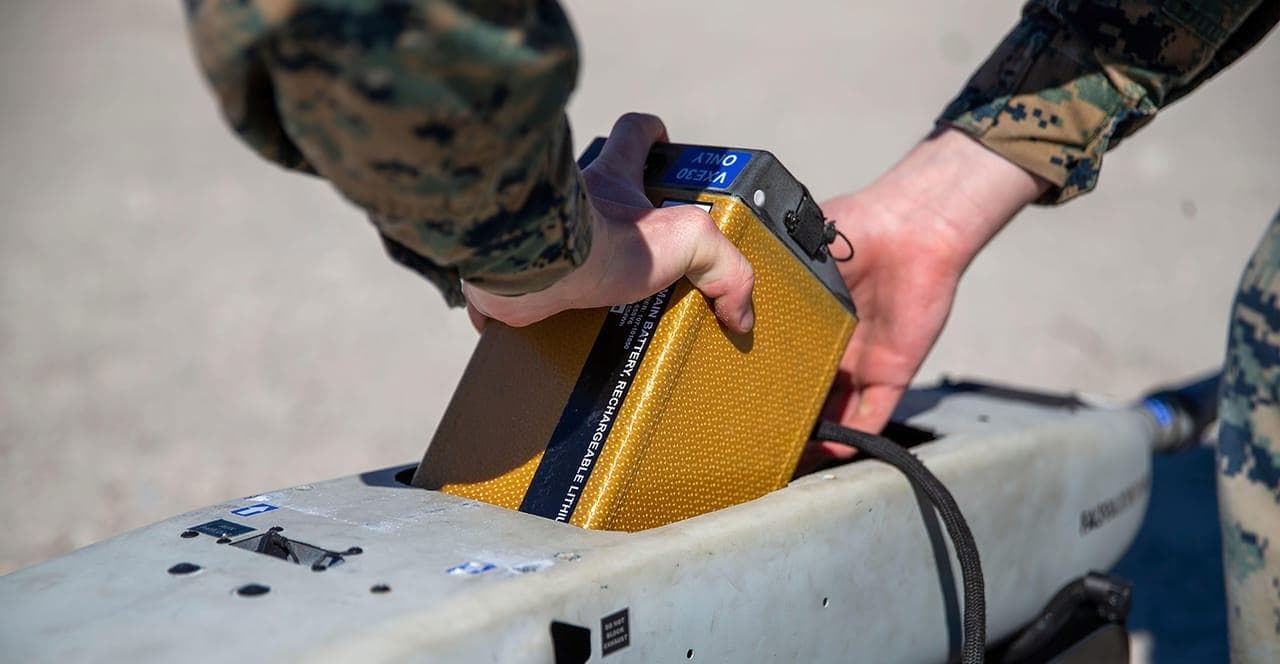
Drone systems are especially affected because their batteries require extremely high energy
density combined with low weight and high discharge capability. Unlike
passenger EV batteries, drone batteries are optimized for endurance, speed, or
rapid power delivery depending on the mission profile.
The challenge is that much of today’s lithium-ion supply chain remains heavily dependent on Chinese
manufacturing and processing capacity.
Even batteries assembled in Europe or North America may still rely on Chinese materials or
components somewhere in the production chain. This creates both strategic and
operational vulnerabilities.
As a result, a new market is emerging around so-called “NDAA-compliant” batteries — cells and
battery systems designed with fully traceable, non-Chinese supply chains.
Manufacturers in South Korea, Japan, Europe, Taiwan, and the United States are now positioning
themselves to meet these requirements as governments tighten procurement rules.
 The war in Ukraine has also demonstrated how quickly drone demand can scale under operational
conditions, exposing battery supply as a critical bottleneck. Reports indicate
FPV drone production increased from thousands of units in 2022 to several
million annually by 2025.
At EPTTAS, we see this development as part of a broader transition within the battery industry.
Batteries are no longer only industrial products.
They are becoming strategic infrastructure — where supply chain transparency, resilience, safety,
and regulatory compliance may become just as important as technical performance
itself.
Sources & References
● Christopher Chico — The drone battery supply chain just became a defense problem
● U.S. Fiscal Year 2026 National Defense Authorization Act (NDAA)
● SES AI battery manufacturing information
● Ukraine Arms Monitor