Lithium-ion batteries are being deployed at a scale we have never experienced before. They now power everything from e-bikes and scooters to cars, vans, buses and heavy trucks, while rapidly expanding into battery energy storage systems (BESS), maritime applications and emerging areas such as aviation and defence.
But most of this installed battery population is still relatively young. In 2025, electric cars represented only around 5% of the global car stock. Electric truck sales exceeded 400,000 for the first time that year, while in the EU only 0.3% of trucks already on the road were electrically chargeable in 2024. At the same time, global battery-storage capacity is now eleven times higher than it was in 2021.
This creates an important question for battery safety:what happens when these rapidly growing battery populations reach year seven, ten or fifteen?
We know a great deal from laboratory testing and accelerated aging studies. What we do not yet have is a mature historical record of thousands of large commercial battery systems reaching those ages under real-world conditions.
Aging is much more than capacity loss
The most visible sign of battery aging is reduced capacity, but internally much more is changing. Research identifies mechanisms including growth of the solid-electrolyte interphase, loss of active material, lithium plating, increased impedance and structural degradation. These can alter heat generation and the thermal-safety characteristics of the cell. A 2026 review describes aging as a latent part of battery-failure development and reports that some aging mechanisms can lower the threshold at which thermal runaway is triggered, although the relationship varies substantially by chemistry and aging pathway.
This is why two batteries with the same age — or even similar remaining capacity — do not necessarily have the same safety characteristics. A battery that has spent seven years under moderate temperatures and relatively gentle cycling has experienced something very different from one exposed to frequent high-power charging, high loads, cold-weather charging and repeated temperature extremes.
Six factors shape the risk as battery systems age:
TIME — Calendar aging.Chemical reactions continue inside lithium-ion cells even when they are not being cycled. Over years, these reactions can consume active lithium, change electrode interfaces and increase internal resistance.
USE — Charge and discharge cycles.Repeated cycling causes electrochemical and structural degradation. This becomes particularly relevant in high-utilisation applications where batteries can accumulate thousands of full or partial cycles.
TEMPERATURE — Heat and cold.High temperatures accelerate many degradation reactions. At low temperatures, particularly during charging, lithium plating can occur. Metallic lithium deposits and dendritic structures are important because they can contribute to internal short circuits.
CHARGING — Rates and patterns.High C-rates, state-of-charge range, depth of discharge and charging temperature all affect the aging pathway. A battery charged quickly several times every day may therefore develop differently from the same chemistry used in a much lighter duty cycle.
PHYSICAL EXPOSURE — Vibration, damage, moisture and environment.Seven years on a city scooter is very different from seven years inside a stationary BESS. Road vehicles experience shocks and vibration; marine systems combine vibration with humidity and salt exposure; industrial and defence applications can face still more demanding environments. Maritime research specifically identifies temperature, vibration, humidity and salt spray as conditions that differentiate shipboard battery aging from land-based applications.
SYSTEM AGING — Wiring, connectors, cooling and electrical components.The cells are only one part of the system. Wiring insulation, connectors, contact points, pumps, cooling circuits, sensors, power electronics and low-voltage electrical systems are all getting older at the same time.
The recent Lucid Air recall is a useful example of why root cause matters.
Lucid is recalling more than 27,000 Air vehicles because of a fire risk, but the issue isnot the high-voltage traction battery. According to the recall information, an exterior low-voltage lighting circuit could draw excessive current and overheat. Lucid reported three fires, four smoke incidents and 33 warranty reports associated with the issue.

If such an incident is later placed into a database simply as an “electric vehicle fire”, an important part of the story disappears.
This distinction may become even more relevant as EVs age. Automotive connector research shows that electrical connectors can deteriorate throughfretting corrosion, oxidation, coating wear, stress relaxation and plastic deformation, all of which can increase contact resistance over time. Cable insulation is also subject to thermal, electrical, mechanical and environmental aging; degradation can reduce dielectric strength and increase susceptibility to arcing and electrical tracking, both recognised fire-initiation mechanisms.
So when today's EV fleet reaches 10 or 15 years of age, we should not only be asking how the traction batteries have aged. We also need to consider years of aging in connectors, wiring, insulation, cooling equipment, sensors and the vehicle's low- and high-voltage electrical architecture.
That is one reason today's simple“EV fires versus ICE fires” statistics cannot tell us what the future risk profile will look like.Root cause matters more than propulsion category.
The aging question looks different in every segment
The same basic chemistry is now being deployed into very different operating environments.
Inmicromobility, batteries can experience frequent charging, vibration, impacts, weather exposure and physical handling. UL identifies excessive temperatures, water exposure, drops, crashes, shock, vibration and impacts among the conditions capable of contributing to lithium-ion battery failures.
Inheavy transport, the challenge is scale and utilisation. EU trucks currently average around 14 years of age, while only 0.3% of the truck fleet was electrically chargeable in 2024. We therefore have virtually no equivalent mature population of 10- to 14-year-old battery-electric trucks from which to derive the sort of long-term fleet statistics available for diesel vehicles.
Imagine an operator deploying1,000 electric trucks today. By year seven, those trucks could represent seven million vehicle-days of accumulated exposure to charging, loading, vibration, temperature and maintenance. We do not yet have a comparable European historical fleet showing what the incident distribution of such a population will look like.

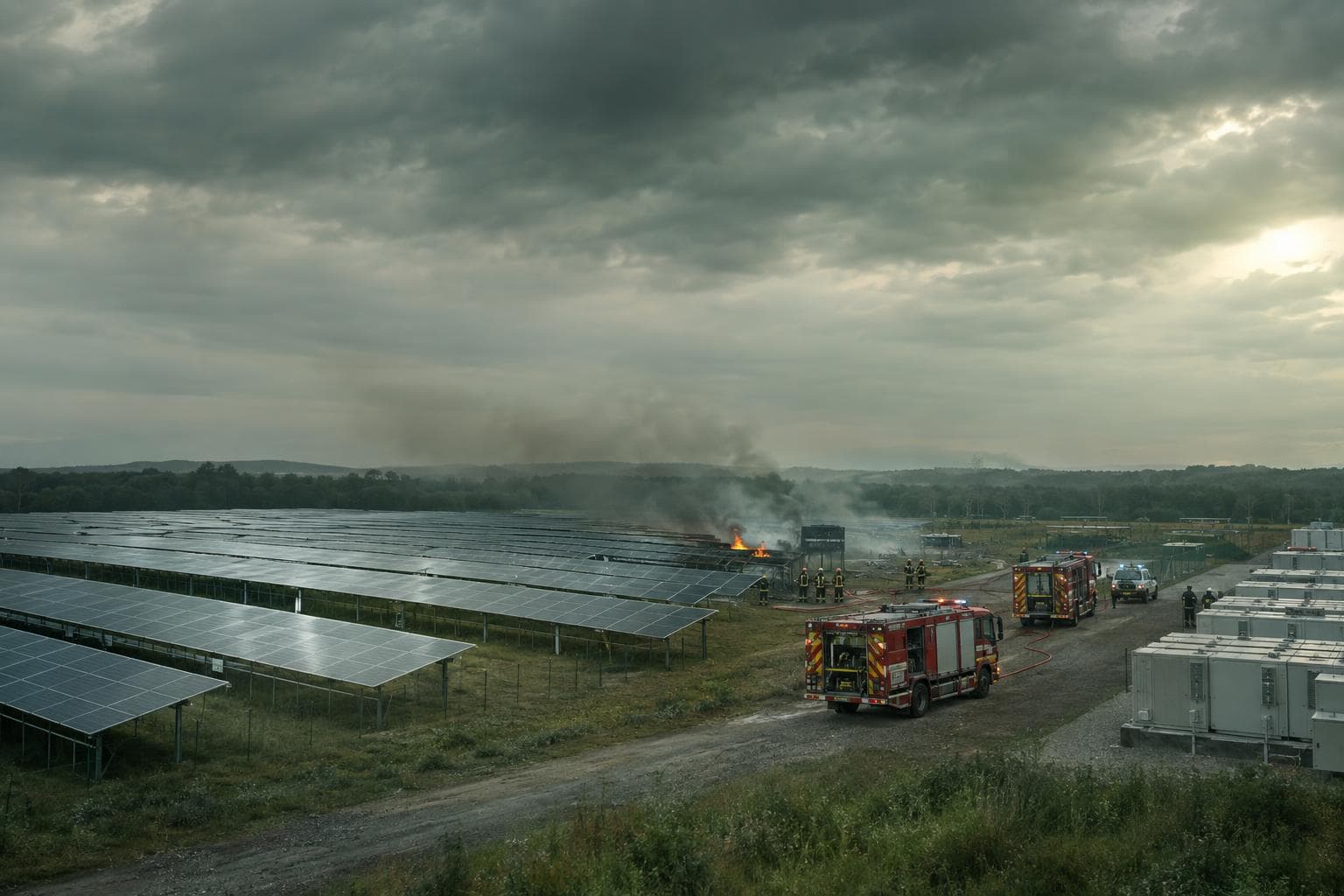
InBESS, the scale is growing even faster. Europe installed 36 GWh of new battery storage in 2025 alone and passed 100 GWh of operating capacity. Much of today's installed base therefore did not exist only a few years ago. A recent study of seven Norwegian BESS installations specifically identifies increasing internal resistance with battery aging as a mechanism capable of increasing cell temperature and contributing to thermal-runaway risk.
Inmaritime applications, batteries must age in an environment combining cycling with vibration, humidity and salt exposure. These are conditions that do not map directly onto the aging history of an electric passenger car or stationary storage system.
Andelectric aviationintroduces yet another aging profile. Research under simulated flight conditions has found that low temperature and low pressure can accelerate degradation mechanisms including lithium plating, which can contribute to internal-short-circuit risk. Aviation researchers also highlight increased internal resistance and power fade as particularly important because the battery may be required to deliver safety-critical power during phases such as landing.
We are building the historical data now
None of this means that every battery becomes unsafe as it gets older, or that battery-electric systems will ultimately experience more fires than the technologies they replace. The science does not support such a simple conclusion.
What the evidence does show is thataging changes the battery and the system around it, and that different aging pathways can change the conditions under which failures occur.
At the same time, electrification is happening so quickly that much of the installed battery population has simply not existed long enough to provide mature 10-, 15- or 20-year real-world safety statistics.
That makes comparisons based only on today's incident rates incomplete. The more important questions will increasingly be:How old was the system? How had it been used? What had degraded? What actually initiated the incident? And how does that change across thousands of batteries as entire fleets and installations age?
The next decade will give us much better answers to those questions.