What Happens to a Company When One Battery Fire Spreads?
Consider this: one out of two businesses never fully recovers following a major fire. Of those that do, half go bankrupt within three years. The ones that survive plan their response to a disaster before it strikes.
Business-continuity sources have long warned that many companies affected by a major fire or major incident either never reopen, or fail within the years that follow. The exact percentages vary by source and should be treated with care, but the message is clear: serious disruption can threaten the survival of a business. The companies that recover are usually the ones that plan before disaster strikes.
For companies operating electric fleets, battery-powered equipment, charging infrastructure or concentrated lithium-ion assets, this matters. A lithium-ion battery fire may start with one vehicle, one pack or one charging point. But if it spreads to nearby vehicles, chargers, buildings, workshops or depot infrastructure, the consequences can quickly move beyond asset damage.
It becomes a business-continuity problem.
The direct battery or vehicle loss may be the easiest cost to calculate. The harder question is what happens next: lost operating capacity, damaged infrastructure, insurance claims, emergency response, investigation time, customer disruption, replacement logistics, reputational damage and the possibility that the business does not recover quickly enough.
That is the real risk.
As electrification scales, companies should not only ask whether a battery can fail. They should ask whether the business can identify the risk early enough to stop one battery event from becoming a company-level crisis.
The fire is the event. The interruption is the real damage.
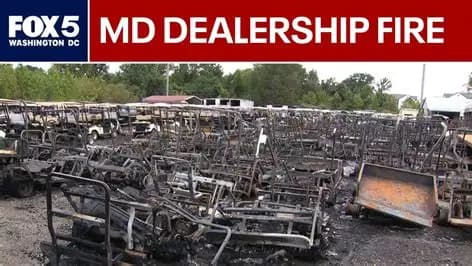
When people think about battery fire risk, the first image is often the burning asset itself: an electric vehicle, a battery pack, a machine, a charging unit or a storage system. But in a real company environment, batteries are rarely isolated.
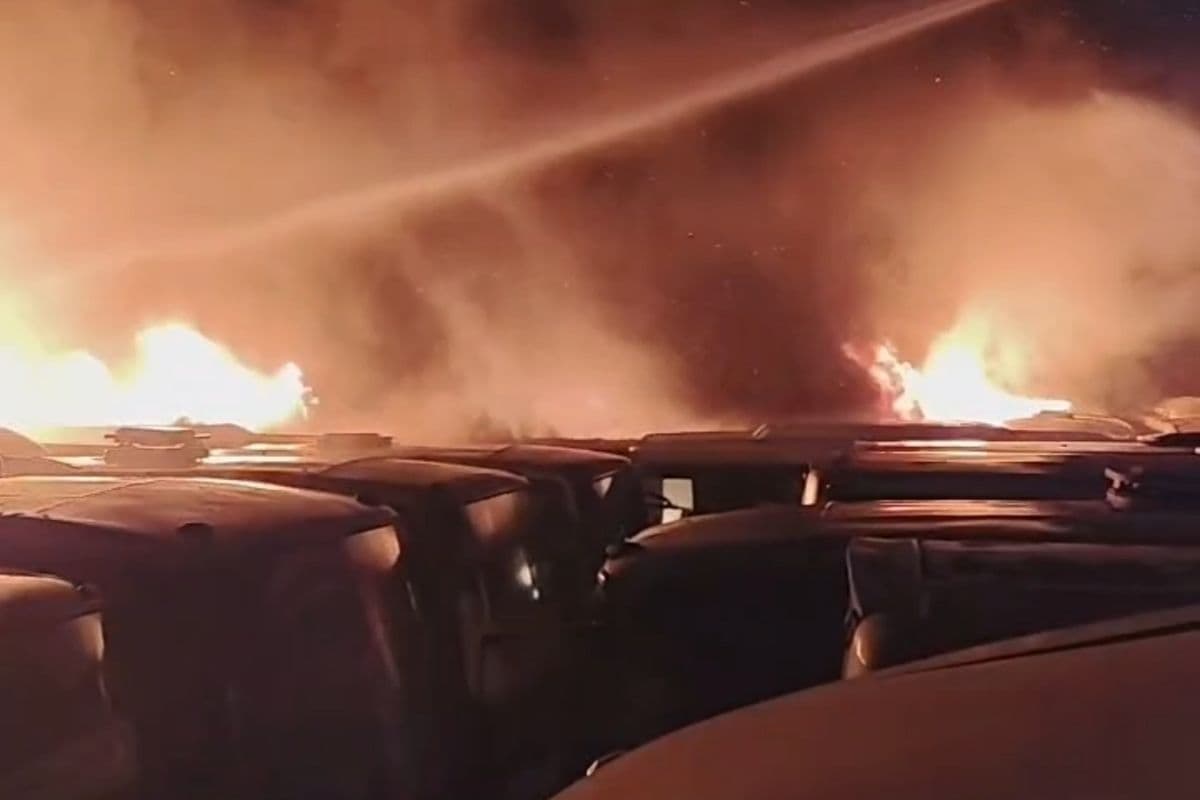
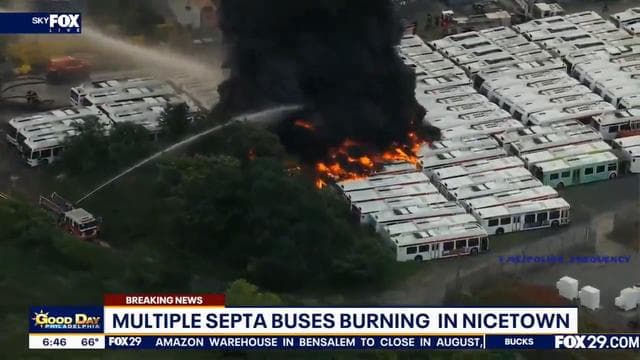
Vehicles are parked beside other vehicles. Chargers are installed close to operational areas. Depots may charge multiple assets overnight. Workshops may handle damaged packs. Storage areas may contain spare batteries, waste batteries or batteries waiting for inspection.
Once fire, smoke, heat, contaminated water or emergency response spreads beyond the first asset, the loss changes character. The company is no longer dealing only with one failed battery. It may be dealing with damaged infrastructure, blocked operations, restricted site access, unavailable charging capacity, insurance investigation and customer disruption.
Fire-damage guidance for businesses points to the same pattern: a fire can damage buildings, equipment, machinery and inventory; force operations to shut down; create repair costs and lost productivity; and strain relationships with customers and suppliers.
For a fleet operator, this can mean routes that cannot be served. For a depot, it can mean chargers out of operation. For a workshop, it can mean quarantine areas, safety reviews and delayed repairs. For a company with public contracts or time-critical services, it can become a service-delivery problem.
The fire may be extinguished in hours. The business impact can continue for days, weeks or longer.

Electrification concentrates valuable assets in one place
Electrification brings clear operational and environmental benefits, but it also changes how companies concentrate risk.
Electric vehicles often spend long periods connected to charging infrastructure. Fleets may be grouped overnight in charging areas. Battery-powered assets may be stored indoors or close to buildings. Damaged batteries may remain on site while awaiting inspection, warranty decisions or manufacturer collection.
This creates accumulation risk: several valuable assets exposed to the same incident.
In a dense depot or charging environment, one battery fire can affect more than one vehicle. It can damage chargers, cabling, workshop areas, building structures, nearby vehicles and operational equipment. Even if the fire is contained, the site may need inspection, clean-up, isolation, electrical checks and insurer approval before normal operations resume.
A company does not only need vehicles. It needs the full operating system around those vehicles to work. A vehicle without a charger is not available. A fleet without depot access is not operational. A battery-powered business without confidence in its charging, storage and isolation procedures is exposed.
This is not one industry’s problem
Lithium-ion battery fire risk becomes more serious when many battery-powered assets are concentrated in one operational environment.
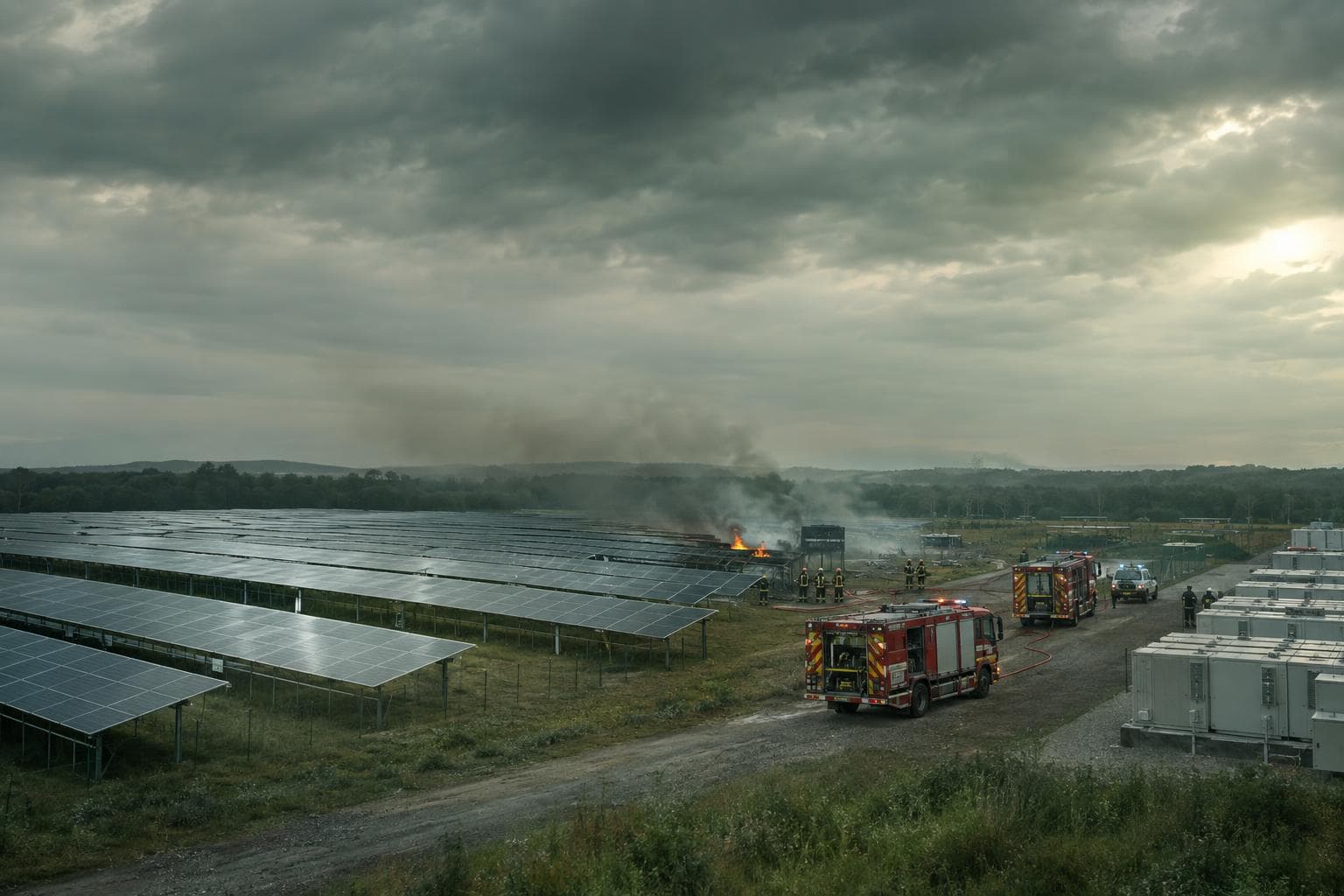
That can be an electric bus depot, a logistics fleet yard, a micromobility charging hub, a vehicle workshop, a warehouse with battery-powered equipment, a marine charging site, a parking structure, a recycling facility or a battery energy storage location. The applications are different, but the business risk follows the same pattern: one battery event can spread to nearby assets, infrastructure and operations.
For transport fleets, the exposure may be vehicles parked and charged overnight. For micromobility operators, it may be large numbers of e-bike or e-scooter batteries charged, stored or swapped in dense urban locations. For workshops and motor traders, it may be damaged or faulty EV batteries waiting for diagnosis, warranty handling or manufacturer collection. For industrial sites, it may be battery-powered equipment located close to buildings, inventory or staff areas.
The waste sector provides one clear warning signal. In the UK, Material Focus and the National Fire Chiefs Council reported more than 1,200 battery fires in bin lorries and waste sites in one year. In Germany, industry figures cited by IFAT and BDE suggest batteries in waste-management vehicles and equipment may cause up to 30 fires per day. But the broader lesson is not limited to waste.
The same risk logic applies wherever batteries are damaged, charged, stored, transported, repaired or concentrated close to other valuable assets.
Insurers are already paying attention. Allianz UK has warned motor traders about the high risks and costs of EV battery fires, including cases where faulty EV batteries stored while awaiting manufacturer investigation led to claims above £5 million and £1.5 million.
For companies scaling electric fleets, micromobility operations or battery-powered infrastructure, the issue is not only whether one battery can fail. The more important business question is what happens around it if it does.
That is why battery safety is becoming a business-continuity issue across the electrification economy.

What an EPTTAS ROI model showed
EPTTAS has modelled the business impact of propulsion-battery fire risk for a major European waste-management company operating electric refuse collection vehicles.
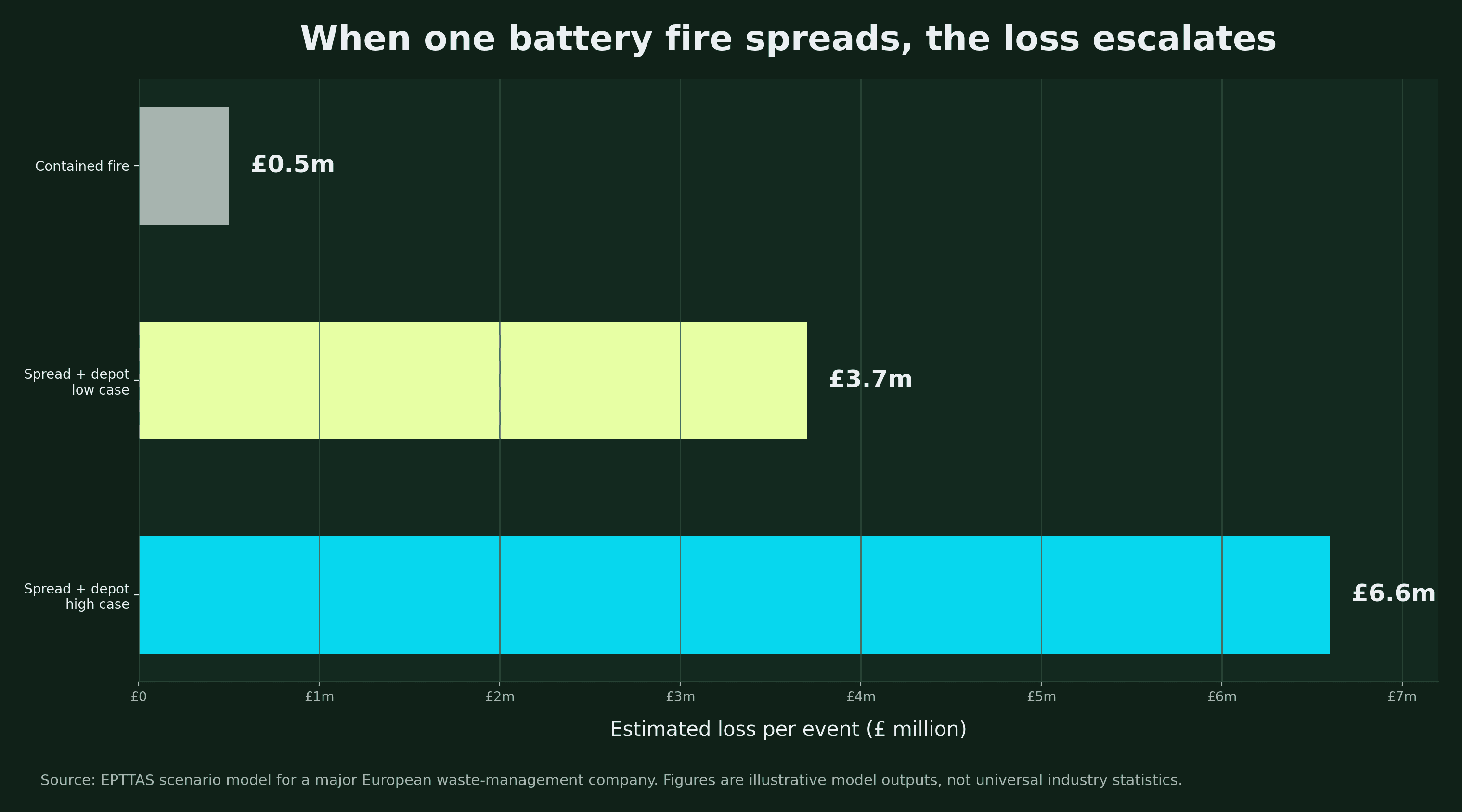
The purpose was to compare a single contained battery fire with a larger spread event involving nearby vehicles and depot infrastructure. In the model, a single contained propulsion-battery fire creates a starting loss of around £500,000 when vehicle replacement and immediate recovery costs are included.
But when the fire spreads to nearby vehicles and depot infrastructure, the estimated loss moves into the multi-million-pound range. Depending on fleet scale and exposure, the model estimates spread-and-depot losses from approximately £3.7 million to £6.6 million per event.
The operating impact is also material. The model estimates operating loss at approximately £175,000 per incident before vehicle replacement, insurance excess or depot damage are included. This covers downtime, emergency response, charging disruption and operational recovery.
On an annualised risk-adjusted basis, the same model shows positive ROI across all electrification scenarios when spread risk is included, with annual ROI ranging from approximately 2.9x to 5.2x.
These numbers should be understood as an EPTTAS scenario model, not as universal industry statistics. Every fleet, depot and charging environment has its own exposure. But the pattern is highly relevant.
The direct battery or vehicle loss is only one part of the cost. The larger risk is the cascade: nearby vehicles, charging bays, buildings, operations, insurance, contracts and reputation.
Recovery should start before the incident
Most recovery advice begins after the fire: secure the site, document the damage, contact insurers, begin clean-up, restore operations and communicate with customers, employees and suppliers. That is essential.
But for battery-powered businesses, recovery thinking should start earlier.
The stronger question is not only how quickly the company can recover after a fire. It is whether the company can reduce the chance that one battery event becomes a major incident in the first place.
That requires earlier visibility. Which assets are charging? Which batteries show abnormal behaviour? Which vehicles should be isolated? Which packs have been damaged, exposed to water, overheated or flagged by diagnostics? Who receives the alert, and who has authority to stop charging, move the asset or quarantine the battery?
These are operational questions, not only technical questions.
EPTTAS is used as an independent Battery Safety Intelligence™ layer alongside existing Battery Management Systems, telematics, charging systems, fleet-management platforms and fire-safety systems. The purpose is not to replace those systems. The purpose is to add earlier, explainable visibility into developing battery risk so operators can make better decisions before a fault becomes a fire, and before one fire becomes a business-continuity event.
In a depot or fleet environment, this can support practical decisions. Charging can be stopped or restricted. A vehicle can be moved away from other assets. A battery can be isolated or quarantined. A technician can prioritise inspection. A depot manager can reduce exposure around a suspect asset.
This is not about creating fear around electrification. It is about making electrification more resilient.
A battery fire may start with one vehicle.
The real question is whether the company can stop it from becoming a crisis.
References
Continuity Central discusses the commonly cited business-continuity failure statistics and why the exact figures should be used carefully:https://www.continuitycentral.com/feature0660.html
RST Risk and Security Solutions covers the operational and financial consequences of fire damage for businesses:https://www.rstnam.com/post/the-impact-of-fire-damage-on-businesses-and-how-to-prevent-it
Material Focus and the National Fire Chiefs Council reported more than 1,200 UK battery fires in bin lorries and waste sites:https://materialfocus.org.uk/?press-releases=over-1200-battery-fires-in-bin-lorries-and-waste-sites-across-the-uk-in-last-year
IFAT/BDE reports battery-fire pressure in German waste-management vehicles and equipment:https://ifat.de/en/industry-insights/detail/battery-fires.html
Allianz UK warns motor traders about the high risks and costs of EV battery fires:https://www.allianz.co.uk/news-and-insight/news/allianz-uk-warns-motor-traders-of-high-risks-and-costs-of-ev-battery-fires.html
TimeTracko discusses disaster recovery planning and business resilience after major incidents:https://timetracko.com/blog/how-businesses-can-recover-and-even-bounce-back-better-after-a-disaster/