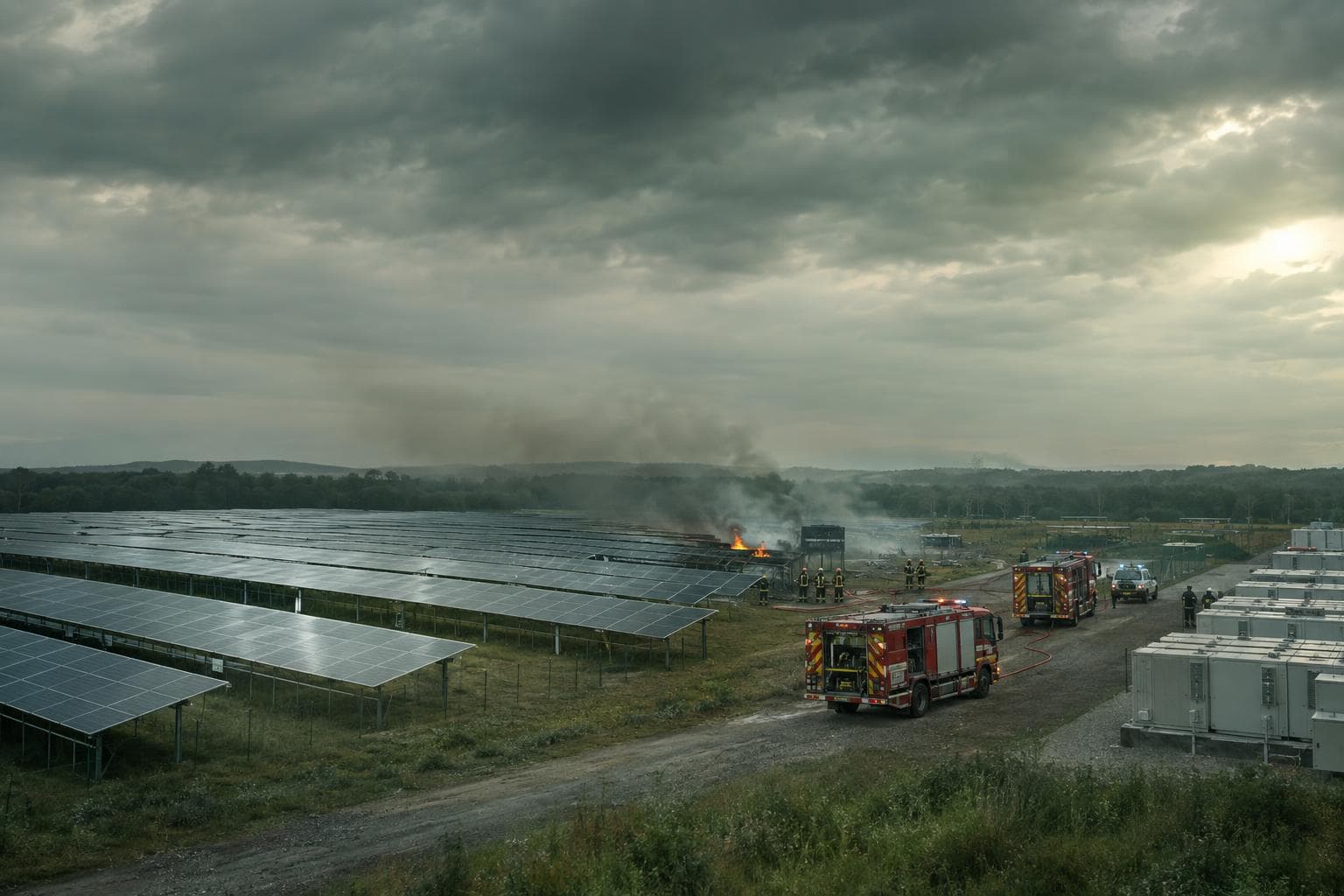
The rapid deployment of Battery Energy Storage Systems (BESS) is a cornerstone of the global energy transition. As renewable energy capacity increases, large scale battery installations play a critical role in ensuring grid stability, flexibility, and reliability.
However, alongside this growth, a critical challenge is becoming increasingly evident:
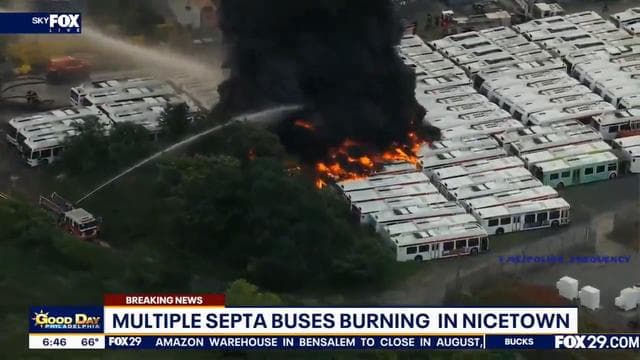
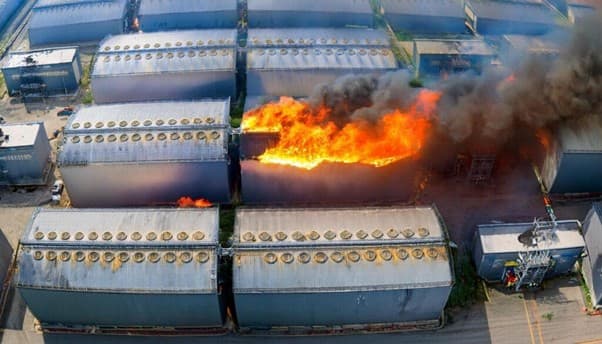
The risk of battery fires at grid scale.
The nature of the risk


Lithium-ion batteries, which dominate today’s storage systems, are inherently complex electrochemical systems. Under certain failure conditions, they can enter a state known as thermal runaway—a self-propagating reaction that leads to rapid temperature increase, gas release, and potentially fire or explosion.
In grid scale installations, where thousands of cells are densely packed, the consequences of such events are amplified:
Rapid propagation between cells and modules
High intensity, long duration fires
Release of flammable and toxic gases
Significant challenges for firefighting and containment
Even with established safety protocols, these events can escalate quickly and unpredictably.
Limitations of current safety approaches
Today’s safety architecture in BESS typically includes:
Battery Management Systems (BMS)
Temperature monitoring
Gas detection systems
While these layers are essential, they are largely reactive in nature.
In many documented incidents, detection occurs only after:
Abnormal temperatures are reached
Gases are already being released
The failure process is well underway
This significantly limits the time available for intervention.
The importance of early detection
At grid scale, time is a critical factor.
Once thermal runaway has initiated, the window for effective mitigation is extremely narrow. In many cases, operators are left with minutes—or less—to respond.
To meaningfully reduce risk, detection must shift from:
Event-based awareness
toPre-failure insight
Identifying the early signatures of battery failure—before thermal runaway begins—provides a fundamentally different level of control.
Implications for large-scale deployments
As BESS installations continue to scale into hundreds of megawatt-hours and beyond, the impact of a single failure event increases accordingly.
This introduces broader implications:
Operational risk: downtime and asset loss
Financial risk: damage, insurance exposure, and project viability
Regulatory risk: increased scrutiny and compliance requirements
Reputational risk: impact on stakeholders and public perception
Ensuring robust safety mechanisms is therefore not only a technical requirement, but a strategic necessity.