As electrification expands across drones, vehicles, and military infrastructure, battery intelligence and safety are becoming strategic capabilities.
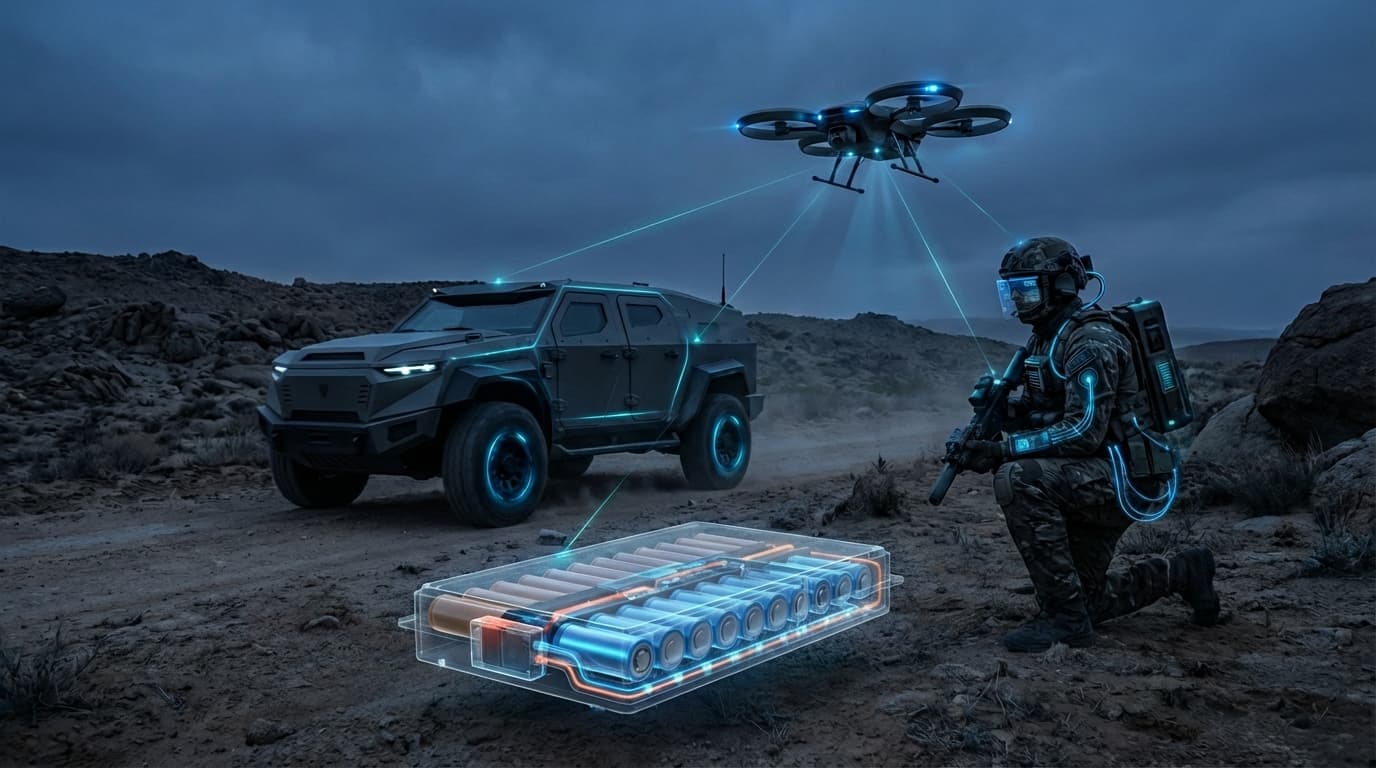
Electrification is increasingly shaping the future of defence technology. From unmanned aerial systems and autonomous ground vehicles to advanced soldier equipment and surveillance platforms, batteries are becoming central to military capability.
Lithium-ion batteries, in particular, offer high energy density and compact form factors that allow military systems to operate longer while carrying less weight. These characteristics are especially important for drones, aerospace systems, and portable electronics used in the field. Recent analysis of defence electrification highlights how advanced batteries are enabling longer mission endurance and new operational capabilities in modern warfare (The National News, 2025).
But as batteries become more deeply embedded in defence systems, they introduce new engineering challenges. The same energy density that enables advanced capabilities also means that battery systems must be carefully designed, monitored, and managed.
In modern defence environments, batteries are not simply components. They are critical infrastructure within mission-critical systems.
Electrification Across Defence Platforms
Battery technology now supports a wide range of military applications. Unmanned aerial vehicles rely almost entirely on battery power for propulsion and onboard electronics. Electrified ground vehicles are being developed to reduce acoustic and thermal signatures during reconnaissance operations. Portable batteries power communications equipment, night-vision systems, sensors, and tactical computing devices carried by soldiers. Military installations are also beginning to integrate battery storage into base energy systems. Hybrid power architectures combining diesel generators, renewable energy, and battery storage can reduce fuel consumption while improving resilience in remote or contested environments. These developments illustrate how electrification is expanding across multiple layers of defence capability—from individual soldiers to large military installations.
Safety-Critical Battery Systems
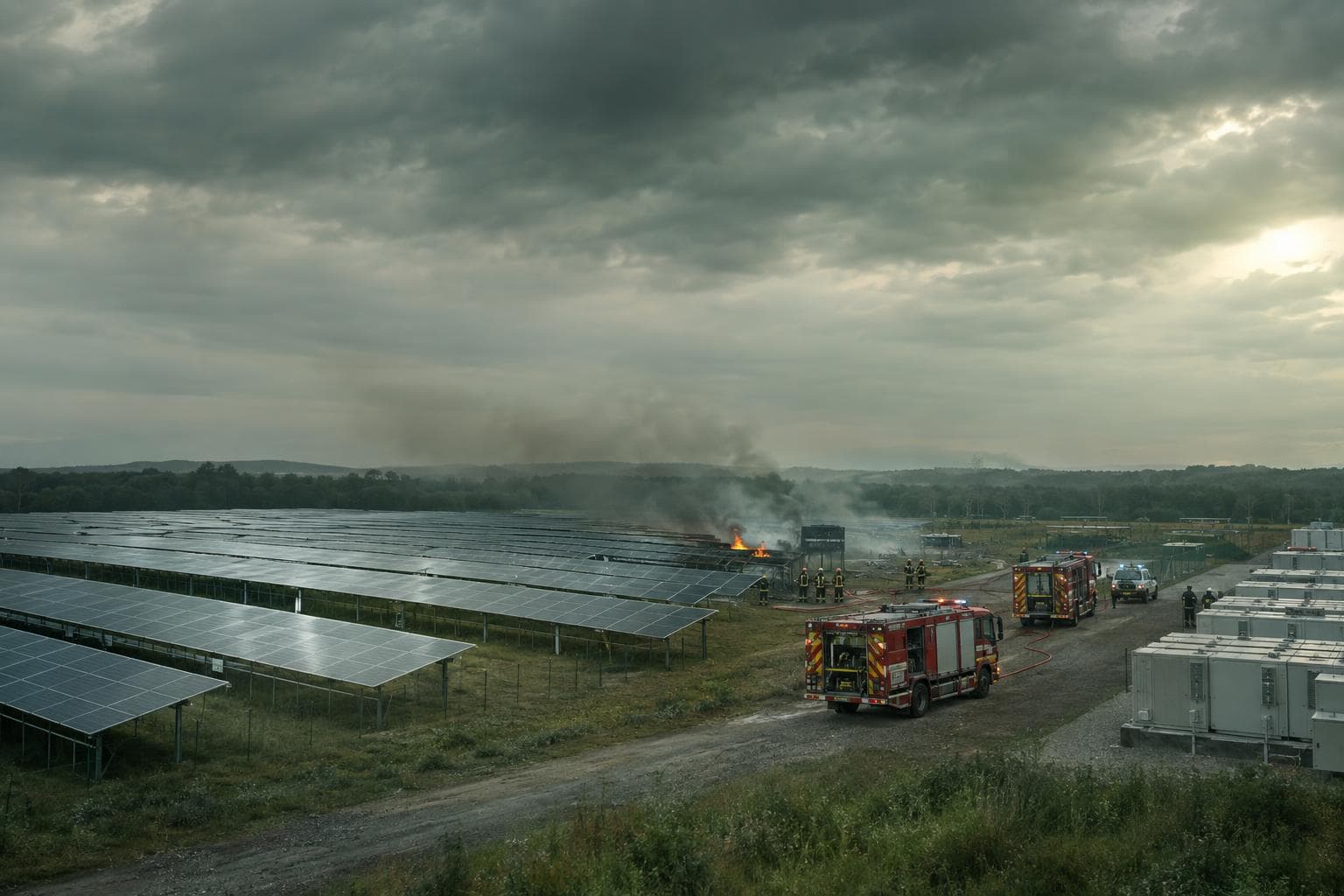
Many defence platforms operate in safety-critical environments, particularly aerospace systems where battery failures can have severe consequences. Lithium-ion batteries store large amounts of energy within compact volumes. If internal faults develop, this stored energy can be released rapidly in a process known as thermal runaway. During thermal runaway, cells can generate intense heat, flammable gases, and potentially fire. Because of these risks, safety engineering for defence batteries focuses on multiple layers of protection. Aerospace and defence battery systems often incorporate redundant monitoring systems, protective circuit designs, and mechanical containment strategies to prevent failure propagation. Safety engineering literature on aerospace power systems emphasises that battery management, thermal monitoring, and containment architecture are essential components of safety-critical battery design (Military Aerospace, 2024). In high-reliability environments such as military aviation, battery safety must therefore be engineered to extremely strict standards.
Strategic Supply Chains and Battery Dependence
As military systems adopt advanced battery technologies, supply chains become increasingly important. Lithium, nickel, cobalt, and graphite are essential materials used in lithium-ion battery production. Much of the global processing capacity for these materials is concentrated in a limited number of regions. This concentration raises strategic concerns for defence alliances that rely on secure supply chains for critical technologies. Recent analysis of NATO energy security highlights how dependence on battery materials and processing capacity may influence the long-term deployment of electrified defence technologies (Al Habtoor Research Centre, 2024). Ensuring reliable access to these materials will be important as electrified defence systems continue to expand.
Operational Stress and Environmental Exposure
Military batteries frequently operate under harsher conditions than civilian systems. Extreme temperatures, mechanical shock, vibration, and rapid charging cycles can all affect battery performance and durability. Drone batteries may experience repeated high-power discharge during manoeuvres. Portable power systems used by soldiers may be exposed to cold environments where battery efficiency declines. Military vehicles may experience vibration or impact stresses that affect battery pack integrity. These operational realities require battery systems that are designed not only for performance but also for robustness under demanding conditions.
Energy as an Operational Constraint
Energy availability directly influences mission capability. Surveillance systems, communications equipment, autonomous vehicles, and electronic warfare platforms all depend on reliable power. In many modern military operations, batteries determine how long systems can remain operational in the field. The endurance of a drone or the operating time of portable equipment is often limited by battery capacity. This makes battery performance a strategic operational parameter rather than a purely technical specification. To maximise effectiveness, military operators increasingly need visibility into battery condition, degradation, and charging behaviour.
Battery Safety and System Resilience
As electrification expands across defence platforms, safety engineering is evolving from purely preventive strategies toward system resilience. While preventing thermal runaway remains critical, engineers increasingly recognise that complex systems must also be able to manage failure events if they occur. Resilient battery systems may include pack architectures that limit propagation between cells, ventilation systems that manage vented gases, and fire suppression strategies tailored to lithium-ion battery fires. These design approaches acknowledge that safety is not determined solely by battery chemistry. Instead, it emerges from the interaction between cell design, system architecture, and operational conditions.
Early Detection and Time-to-Intervene
One concept gaining increasing attention in battery safety engineering is time-to-intervene. Battery failures rarely occur without warning. In many cases, internal faults generate subtle electrical or thermal anomalies before thermal runaway develops. Detecting these early signals can create a valuable window for intervention. Operators may be able to isolate a battery, adjust charging conditions, or remove equipment from service before a failure escalates into a fire event. At EPTTAS, we believe that improving visibility into these early indicators is essential as battery deployments expand across critical infrastructure—including defence systems. Increasing the time available for intervention enables organisations to shift from reactive response toward preventive operational management.
The Future of Electrified Defence
Electrification will continue to expand across defence platforms. Autonomous systems, advanced sensors, portable electronics, and hybrid military vehicles will all depend on reliable energy storage. As this transition progresses, batteries will play a larger role not only in powering defence systems but also in shaping how those systems are designed, maintained, and operated. Ensuring that battery systems remain safe and reliable under demanding operational conditions will therefore be essential. For defence organisations, the goal is not simply adopting more batteries. It is ensuring that battery systems are intelligently managed, resilient, and monitored throughout their lifecycle. Electrification is transforming modern military capability.
Understanding the behaviour of the batteries that power these systems will be central to ensuring that this transformation remains both effective and safe.