Artificial intelligence is driving one of the fastest infrastructure expansions in modern history — but the biggest challenge for many new data centers is no longer construction, processors, or computing capacity.
It is access to electricity.
While hyperscale data centers can often be built within 18–24 months, grid connection and utility upgrades may take three to seven years in some regions. As a result, batteries are increasingly being used not only for backup power, but as strategic infrastructure tools that help facilities secure earlier grid access and operate within utility limits.
The development is creating two distinct battery layers inside modern data centers.
Traditional UPS (Uninterruptible Power Supply) batteries remain close to critical IT equipment and are designed to respond instantly during short grid disturbances or outages. Their role is to maintain operations until backup generators activate.
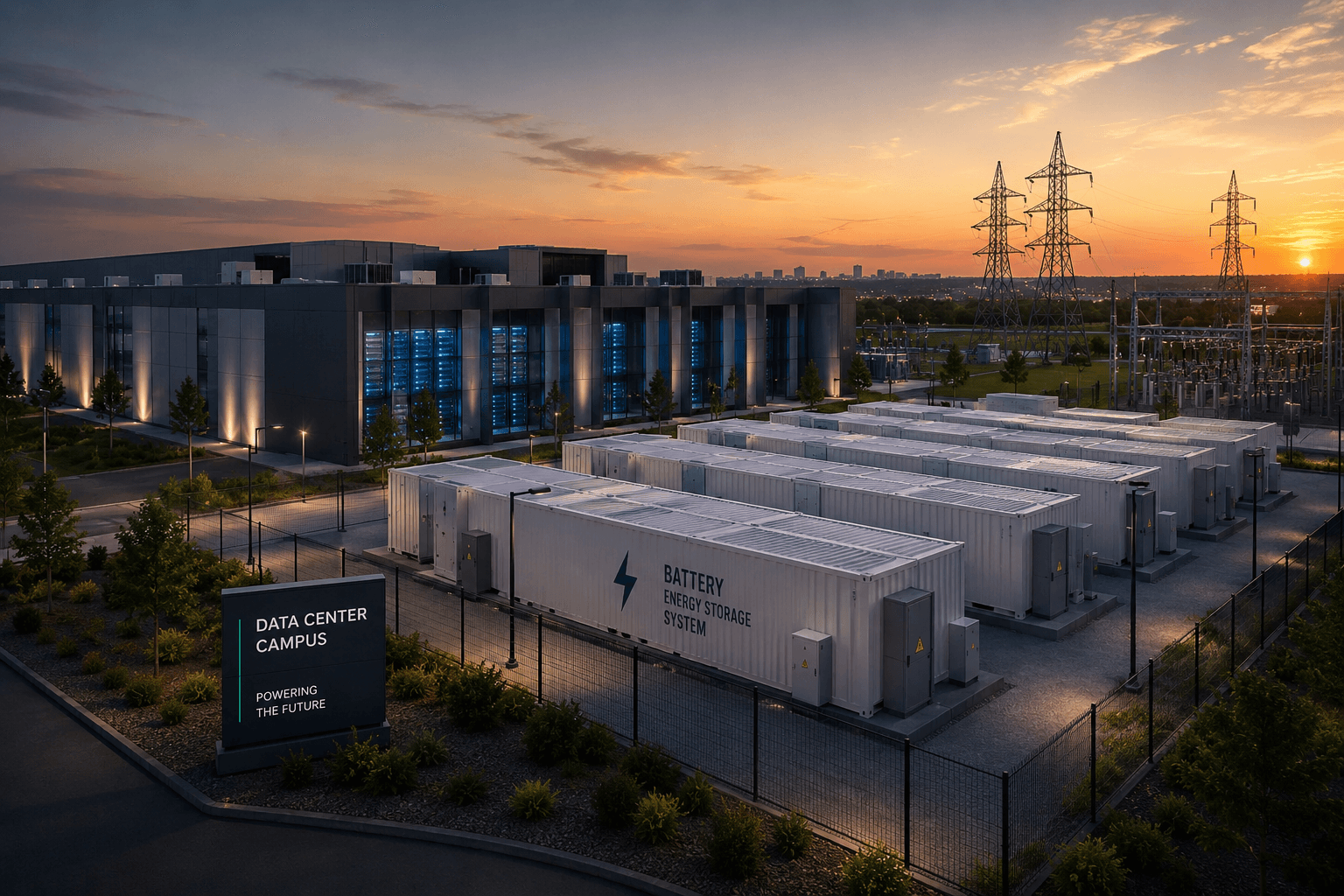
At the same time, behind-the-meter battery energy storage systems (BESS) are becoming increasingly important. These larger systems are installed at the site boundary and are used to reduce peak demand, shape load profiles, and support utility interconnection approval. In some cases, batteries are helping facilities energize years earlier than conventional grid upgrades would otherwise allow.
This challenge is growing rapidly.
PJM forecasts 55 GW of new large-load growth by 2030, while ERCOT’s large-load queue expanded from 233 GW in late 2025 to roughly 410 GW by March 2026 — with most of the increase linked to data centers.
At the same time, companies includingGoogle,Microsoft,Amazon,Meta, andOracle are accelerating investments into AI infrastructure. Reuters reported in 2026 that major technology companies are expected to spend more than $700 billion on AI infrastructure, up from approximately $410 billion in 2025.
Batteries are therefore becoming more than emergency backup systems.
Microsoft has deployed lithium-ion UPS batteries with Eaton’s EnergyAware technology at its Dublin data center, where the batteries also participate in grid frequency-response services.Google’s Saint-Ghislain facility in Belgium operates a 2.75 MW / 5.5 MWh Fluence system that provides both backup support and grid services.
This shift also changes the operational profile of battery systems. Instead of remaining idle in standby mode, many batteries are now cycling regularly as part of load management and grid-support operations.
From a battery safety perspective, this is important.

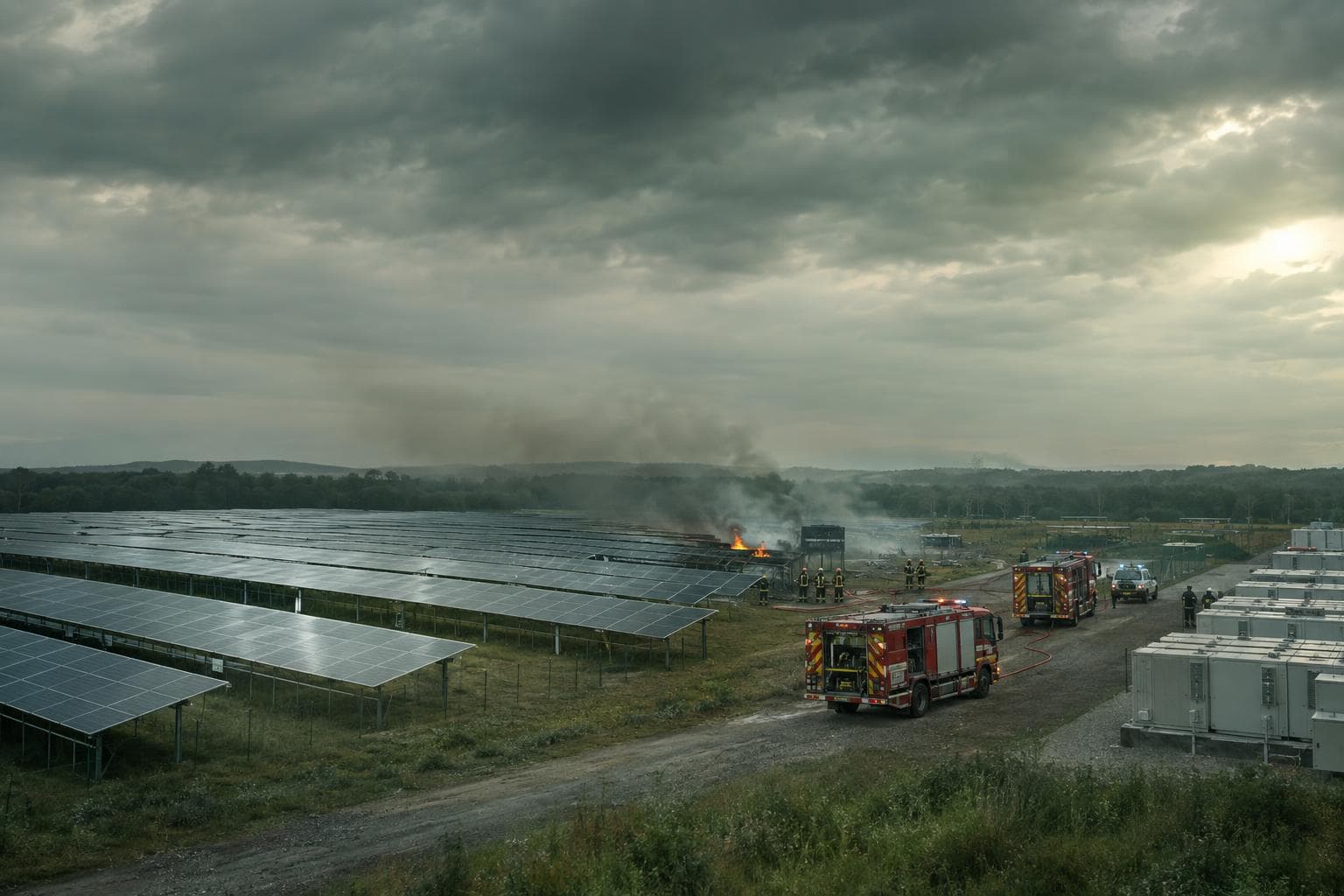
Large-scale incidents continue to shape industry discussions around fire safety. The 2025 fire at the Moss Landing Energy Storage Facility in California damaged roughly 55% of the site’s approximately 100,000 lithium-ion batteries and increased focus on thermal runaway containment, installation design, emergency response, and fire-code development for stationary energy storage systems.
The market is also increasingly shifting toward LFP (Lithium Iron Phosphate) chemistry for stationary storage applications. Compared with many NMC-based systems, LFP offers lower cost, longer cycle life, and improved thermal stability, making it an increasingly common choice for large-scale BESS projects near critical infrastructure.
Ultimately, batteries are becoming part of the infrastructure strategy itself.
For many data centers, they are no longer simply backup power — they are becoming tools for grid access, operational flexibility, and energy resilience in increasingly constrained electrical networks.