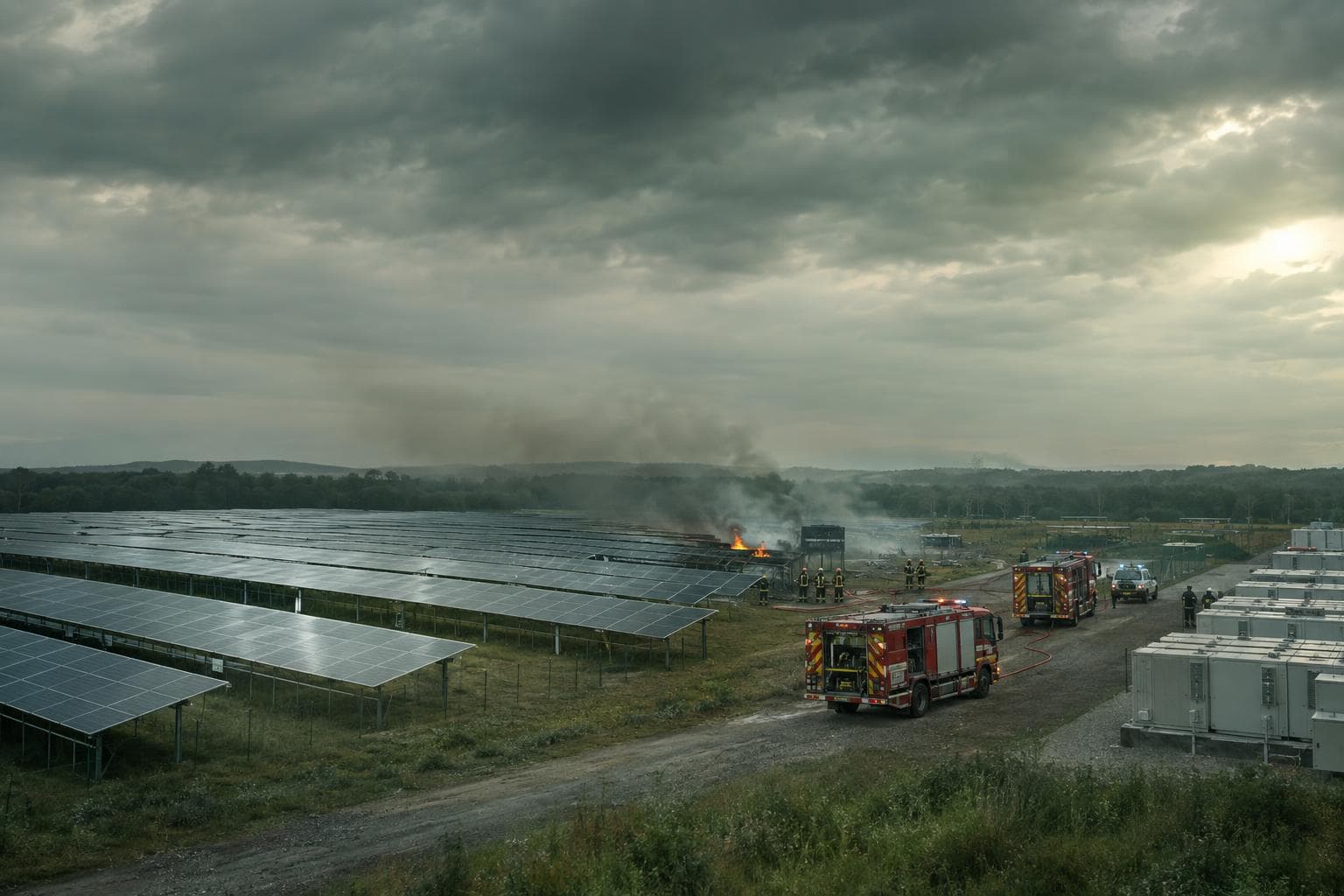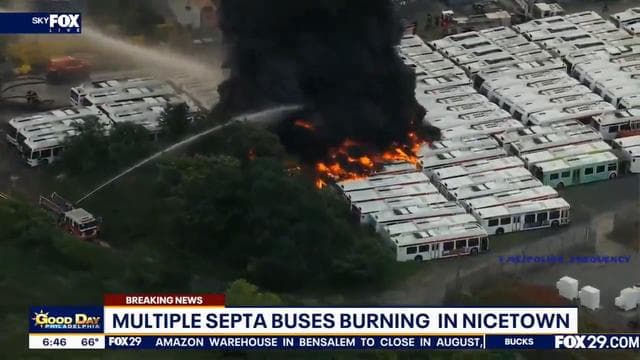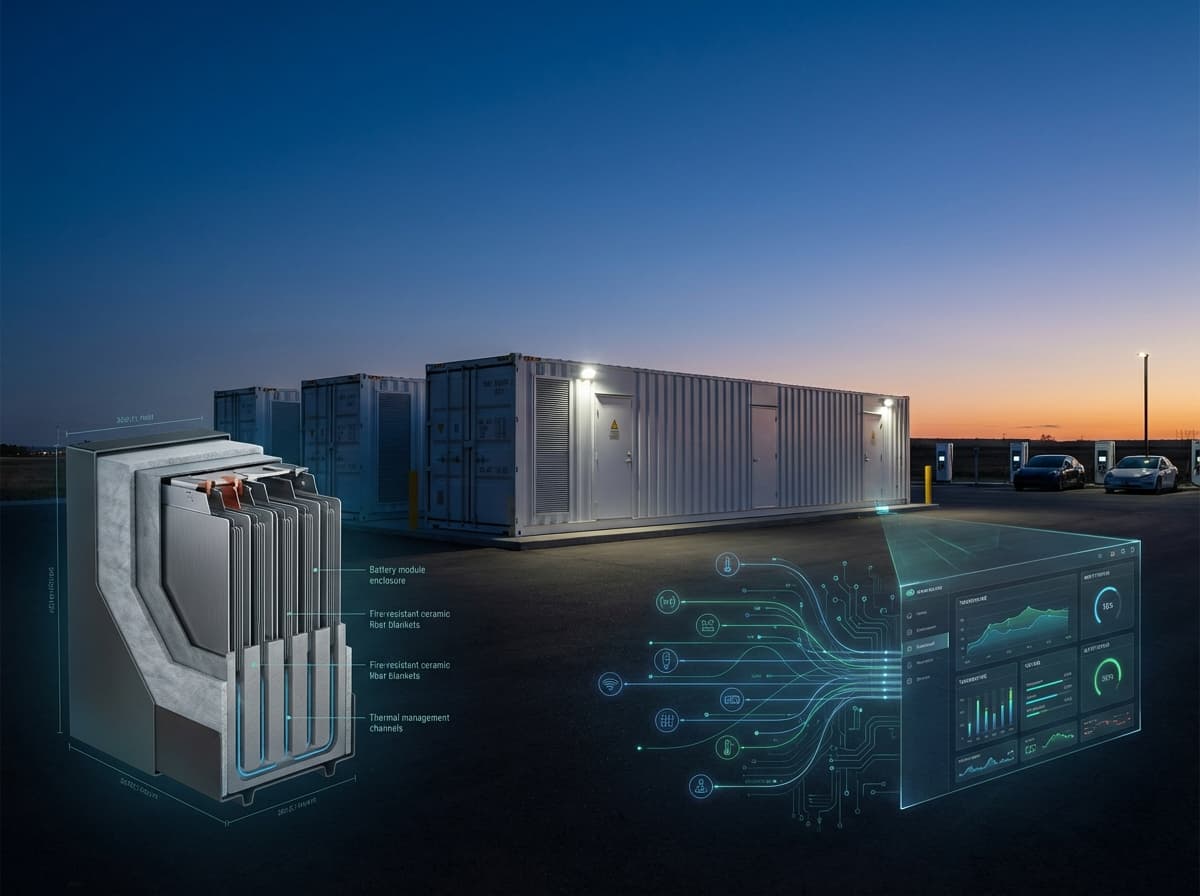
If you operate EV or energy storage assets in 2026, battery safety intelligence is becoming a requirement, not a nice-to-have. Passive fire protection still matters, but it mostly helps after a system has already entered failure mode. The real win is preventing the conditions that lead to thermal runaway in the first place.
This post explains why the industry is moving from containment to prevention, what the BMS can (and can’t) do on its own, and how a supervisory layer like EPTTAS fits into a modern safety stack.
The safety model is changing
For years, battery fire protection has been built around containment:
thicker housings
fire-resistant materials
venting systems
thermal barriers
Those measures are important. They reduce damage, protect nearby equipment, and buy time. But here’s the hard truth: they’re mostly reactive. They help once something has already gone wrong. Battery systems are now larger, denser, and more autonomous. They run harder, in more environments, with less human oversight. In that world, safety isn’t defined only by how well you contain a fire. It’s defined by whether a fire happens at all.
Battery fires rarely start suddenly
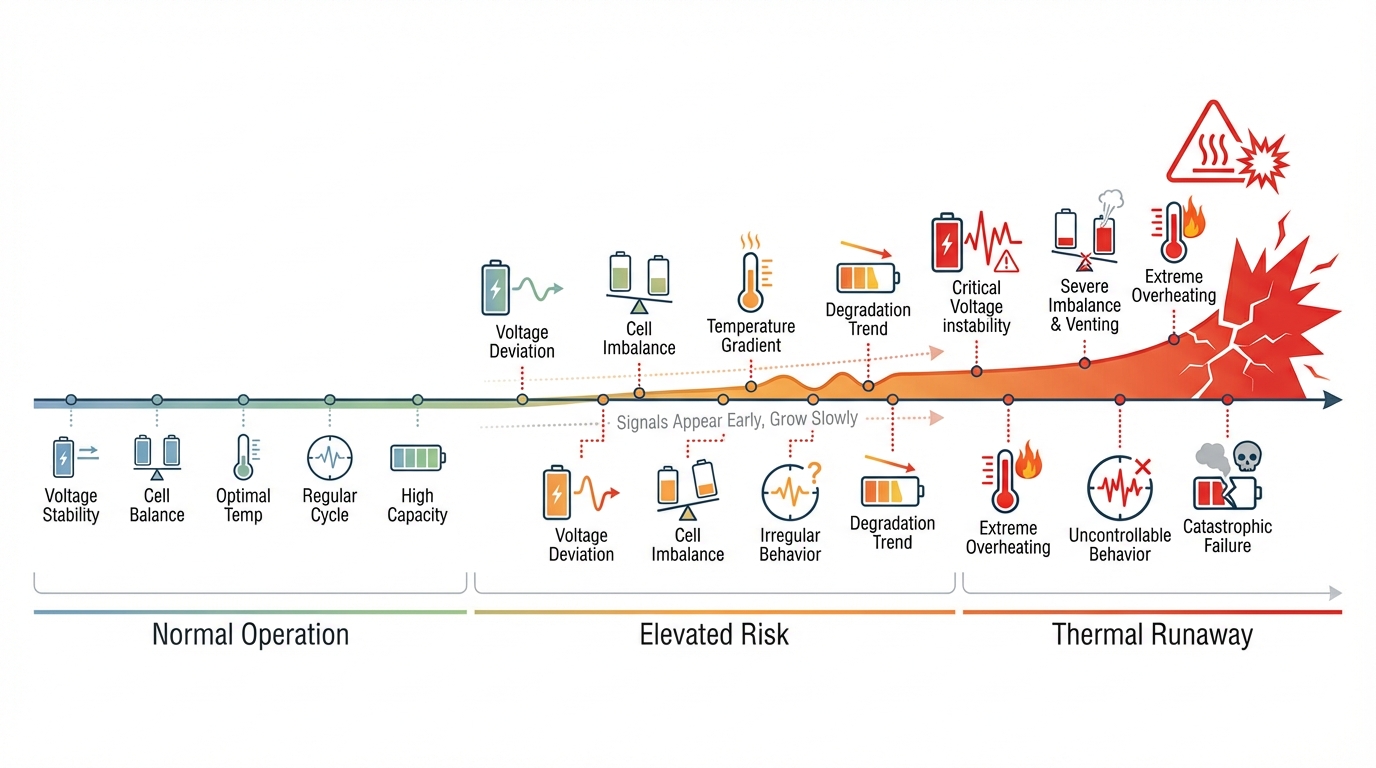
Battery incidents look sudden in headlines. Operationally, they usually aren’t. Thermal runaway is often preceded by weeks or months of small, measurable changes, like:
subtle voltage deviations
abnormal temperature gradients across cells or modules
growing cell imbalance
irregular behavior during charging or at rest
gradual degradation that doesn’t trip a hard threshold
Your system is warning you, quietly. Most operators already have plenty of measurements. The gap is interpretation: recognizing early signals, knowing which ones matter, and understanding what they imply for risk. That’s where many battery fire prevention strategies still run out of road.
Why passive fire protection hits a ceiling
Passive fire protection is built to do three jobs well:
contain heat
slow propagation
protect people, property, and adjacent assets
It’s essential for damage control. It’s not a prevention strategy.
Once thermal runaway begins, you’re already in failure mode. At that point:
the BMS is responding, not steering
safety mechanisms are defensive, not preventive
the event is costly, visible, and often irreversible
That’s why modern safety needs a shift in emphasis: From containment to prevention.
The BMS is the first line of defense, but it’s constrained
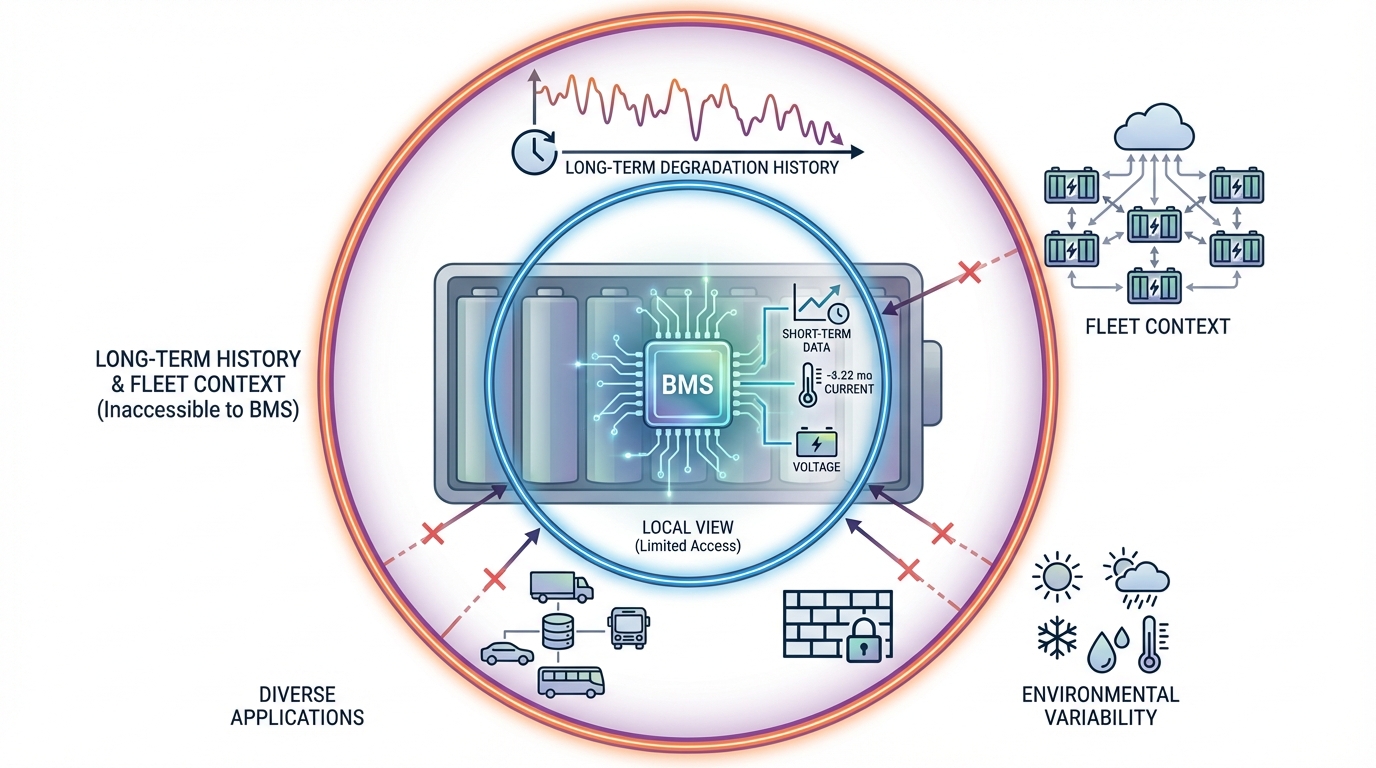
A Battery Management System is still the most important onboard safety component. It:
prevents overcharge and deep discharge
monitors temperature and current
manages balancing
triggers shutdowns when limits are crossed
Without it, large battery systems don’t work.
But the BMS also has built-in constraints that matter more as systems scale:
limited compute
limited historical context
a local view of a single pack or system
fixed algorithms set at design time
As batteries age, duty cycles change, climates vary, and degradation patterns diverge. The BMS keeps making decisions, but it’s doing so without learning from long-term behavior across time or across fleets. That’s how safety gaps form. Not because the BMS is “bad,” but because it was never designed to be the full safety story.
Fire prevention starts with behavior, not events
When you’re serious about thermal runaway prevention, you stop treating safety as a single moment in time and start watching behavior over time.
The most useful questions usually sound like this:
Is this system aging normally, or drifting into abnormal behavior?
Are balancing actions becoming more frequent or more aggressive?
Is the BMS intervening more often than expected?
Are operating margins shrinking month after month?
Early on, these issues often don’t trip alarms. They drift. They accumulate. Then one day you’re dealing with an “unexpected” incident that wasn’t actually unexpected. Detecting that slow accumulation of risk is difficult with onboard logic alone, especially when you’re managing many assets across different environments.
What “battery safety intelligence” actually means

Battery safety intelligence is a supervisory layer that focuses on early detection and decision quality, not just threshold monitoring. It doesn’t replace the BMS. It doesn’t replace hardware safeguards. It adds three practical capabilities that many operators need now:
Long-term trend analysis
It spots changes in degradation, imbalance, and intervention patterns over months and years, not seconds.
System and fleet context
It helps distinguish “normal for this use case” from “abnormal and getting worse,” across environments and profiles.
Early risk interpretation
It identifies conditions that increase the likelihood of failure before thermal limits are approached.
A simple way to say it is: it helps you act while the problem is still cheap and controllable.
Where EPTTAS fits in the safety stack
EPTTAS is designed to complement onboard safety systems. The BMS acts in real time. EPTTAS observes and interprets behavior over time.
In practice, EPTTAS supports:
continuous monitoring of battery and BMS behavior
early identification of abnormal trends before critical thresholds are reached
contextual analysis across fleets, environments, and usage profiles
independent validation of safety-critical decision patterns
Instead of waiting for voltage or temperature limits to trigger protective action, EPTTAS focuses on identifying the conditions that lead to those moments.
That typically looks like:
flagging abnormal aging trajectories early
highlighting systems where safety margins are quietly eroding
surfacing intervention patterns that suggest growing instability
supporting earlier, lower-risk maintenance and operational decisions
The point isn’t to “handle fires better.” The point is to make fires far less likely.
What this means for EV and energy storage operators
If you’re operating EV fleets or energy storage systems, this shift is practical, not theoretical.
1) Risk management becomes continuous.
Instead of relying mainly on containment and emergency response, you’re managing risk through monitoring, interpretation, and early intervention.
2) Assets become more predictable.
Earlier detection of abnormal behavior supports better maintenance planning, fewer surprises, and more consistent performance over time.
3) Your safety posture gets easier to defend.
As incidents draw more attention, being able to show proactive monitoring and prevention matters. It’s useful in internal governance, regulatory conversations, and insurance discussions.
And there’s a leadership element to it, too. Over the next decade, the safest operators won’t be the ones with the thickest barriers.
They’ll be the ones who understand their systems best.
From isolation to intelligence
Hardware protection will always matter. Thermal barriers, venting, and containment remain essential when failures occur. But in 2026, real safety is defined earlier. It’s defined by how well you spot risk building up, how quickly you interpret what you’re seeing, and how confidently you can intervene before you enter failure mode. Battery fire prevention is no longer just about isolating danger. It’s about recognizing it early enough that it never becomes visible at all.
If you want to compare your current safety stack to a prevention-first approach, contact us. We’ll walk through early detection strategies for your EV or energy storage systems and where a supervisory layer like EPTTAS may fit.