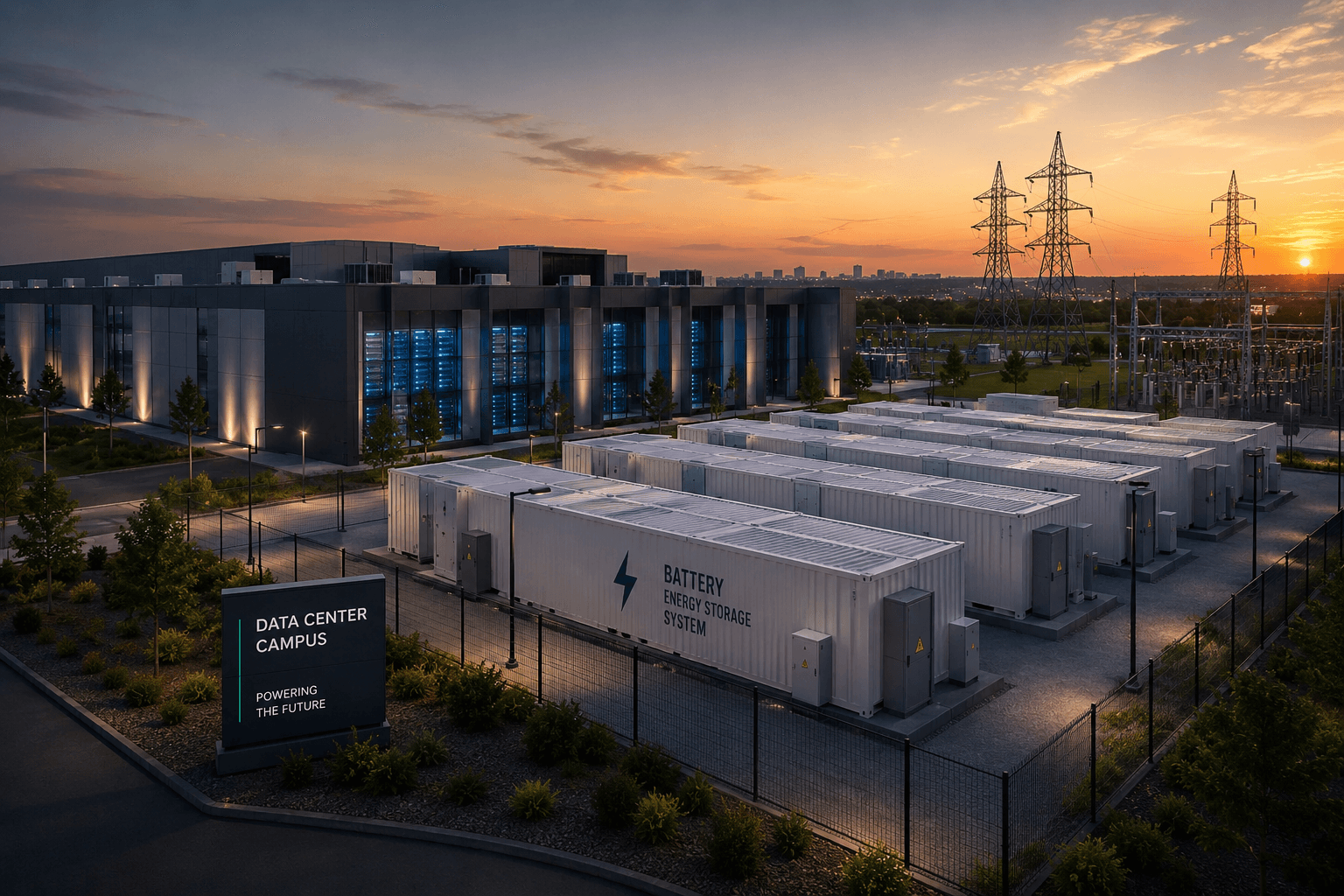
Battery Safety: From Isolated Systems to Connected Battery Intelligence
EV battery safety is shifting beyond the BMS toward connected, predictive intelligence that helps fleets reduce thermal runaway risk and improve uptime.
The EV industry is moving away from closed, proprietary battery architectures and toward a model defined by greater transparency, stronger predictive capability, and broader system-level protection. That shift is being shaped by both regulation and technology.
Recent developments across regulation and technology point to a clear shift in the EV industry. Battery systems are moving away from closed, proprietary architectures toward a future defined by greater transparency, predictive capability, and system-level protection.
As electrification scales across vehicles, fleets, and infrastructure, battery safety is no longer confined to what happens inside the battery. It increasingly depends on how systems behave across real-world operating conditions.
From Device Control to System Understanding
The Battery Management System (BMS) remains fundamental. It monitors voltage, temperature, and state-of-charge, and has evolved into a highly capable control layer integrating thermal protection, fault detection, and operational safeguards.
However, the BMS is inherently limited to the battery itself.
In practice, battery performance and risk are influenced by external factors—charging behaviour, environmental exposure, duty cycles, and infrastructure interaction. These variables shape degradation and failure dynamics but extend beyond the visibility of a single system.
As a result, battery safety becomes a question of system-level understanding, not just device-level control.
Predictive Capability and Early Risk Signals
Advances in data analytics and AI are enabling a shift toward predictive safety.
By analysing electrochemical, thermal, and electrical behaviour, emerging models can identify early-stage deviations that precede critical events. This allows for more proactive operational strategies and improved reliability across assets.
A key implication is the ability to extend time-to-intervene.
Battery failures often develop over time. Detecting subtle anomalies early—before escalation—creates a window for intervention, whether through operational adjustments, isolation, or preventive action.
The Emergence of a Connected Intelligence Layer
As battery deployments grow in scale and complexity, safety depends increasingly on connecting insights across systems.
Multiple stakeholders—OEMs, operators, infrastructure providers, and insurers—interact with battery systems, yet data remains fragmented. This fragmentation creates blind spots in how risk is understood and managed.
This is driving the emergence of a connected battery intelligence layer.
Rather than replacing the BMS, this layer builds on it—integrating data across assets and environments to provide:
Cross-system visibility
Contextual risk assessment
Lifecycle-aware insights
Greater transparency across stakeholders
At EPTTAS, we view this as a structural evolution in battery safety—from isolated monitoring toward connected, intelligence-driven systems.
Transparency as a Structural Requirement
Industry and regulatory developments increasingly reflect the same direction:
battery safety is becoming measurable, transparent, and outcome-driven.
This shift places new emphasis on continuous monitoring, predictive understanding, and the ability to demonstrate safe operation over time.
Transparency is no longer optional.
It is becoming a prerequisite for scaling electrified systems.
Conclusion
Battery systems are no longer standalone components.
They are embedded in complex, interconnected environments where safety emerges from system behaviour.
The BMS remains essential, but it is no longer sufficient on its own.