EV battery fire while parked is rare, but it does happen. When it does, the reason usually isn’t “mystery electricity.” It’s that the BMS can’t see (or stop) every failure mode inside a lithium-ion cell.
If you manage an EV fleet, this is the mental model that helps most: A BMS is excellent at preventing operational abuse. It’s not a fire extinguisher.
What the BMS does well
A modern Battery Management System (BMS) is built to keep the pack inside safe operating limits. It’s great at:
Monitoring voltage and temperature at the module/pack level
Managing charge/discharge limits
Balancing cells
Logging faults and isolating the pack electrically
In plain terms, the BMS is strong at preventing problems that show up as clear signals.
Where the BMS hits a hard limit
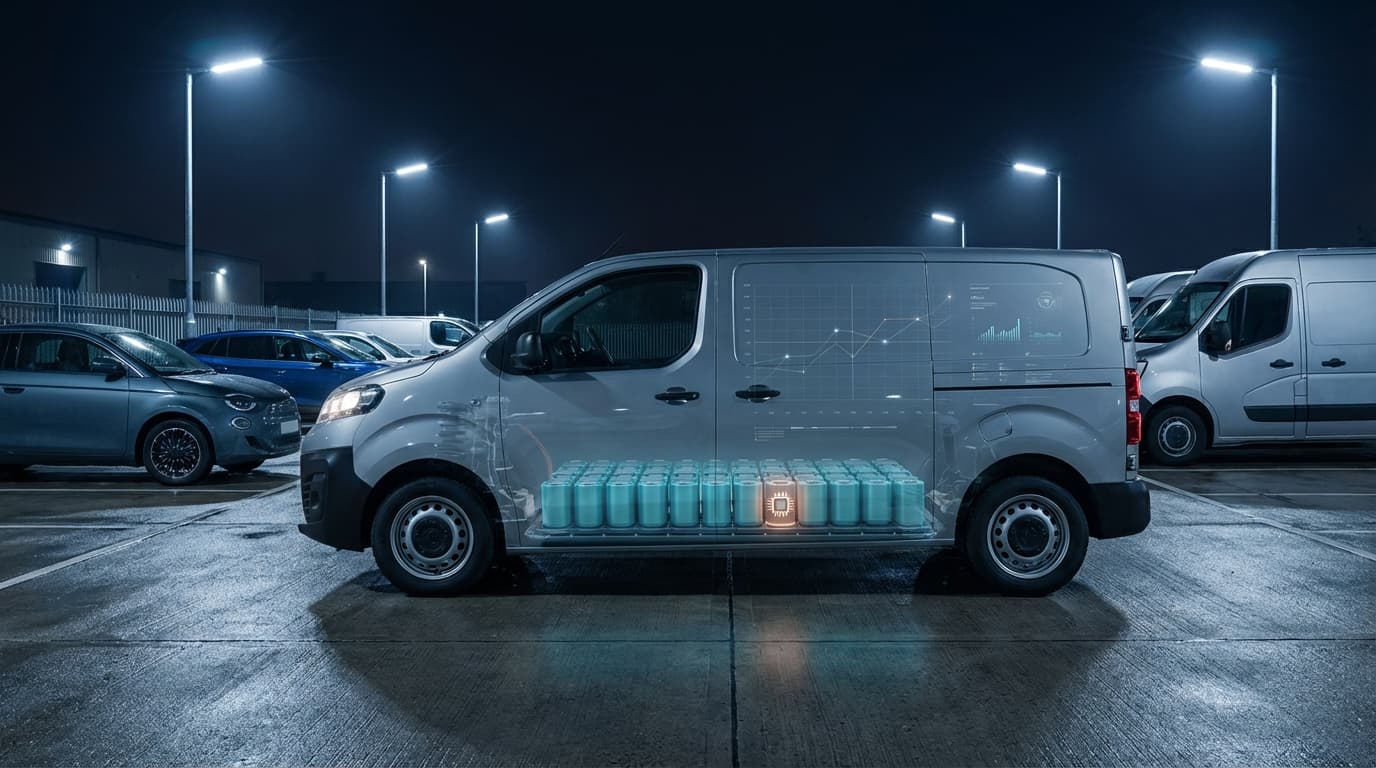
Many “parked” incidents start inside one cell, in places the BMS can’t directly measure.
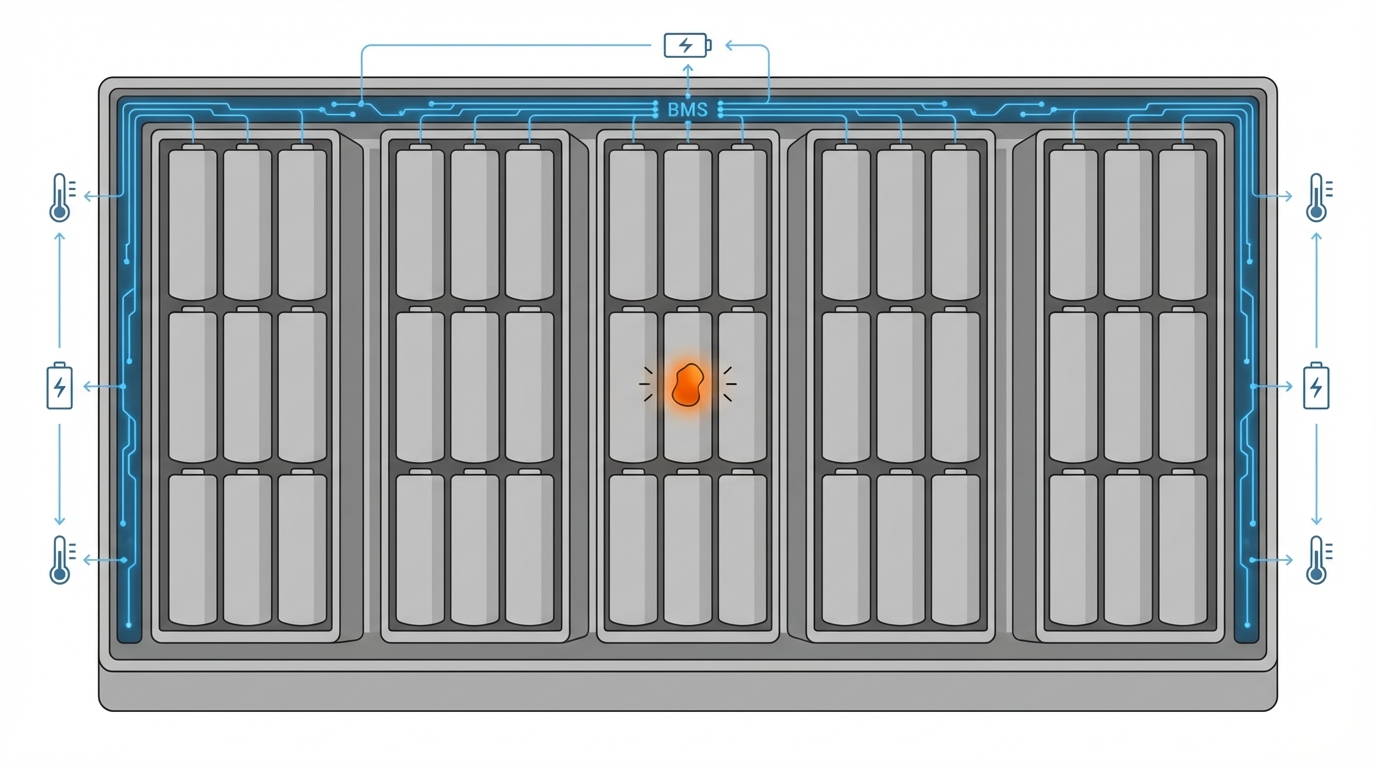
Common origins include:
Latent manufacturing defects (tiny contamination, separator folds, tab issues)
Internal shorts that begin small and intermittent
Aging pathways like lithium plating and dendrite growth
Hidden damage from earlier impacts that didn’t look serious at the time
Moisture/coolant ingress leading to insulation breakdown
These can be electrically quiet at first. You don’t always get a clean voltage or temperature warning until the failure has already accelerated.
Here’s the key quote-able point: Thermal runaway often becomes obvious only after it’s already self-sustaining.
The “nothing happened” timeline
When people say an EV caught fire “for no reason,” what they usually mean is: the trigger wasn’t visible at the moment of ignition.
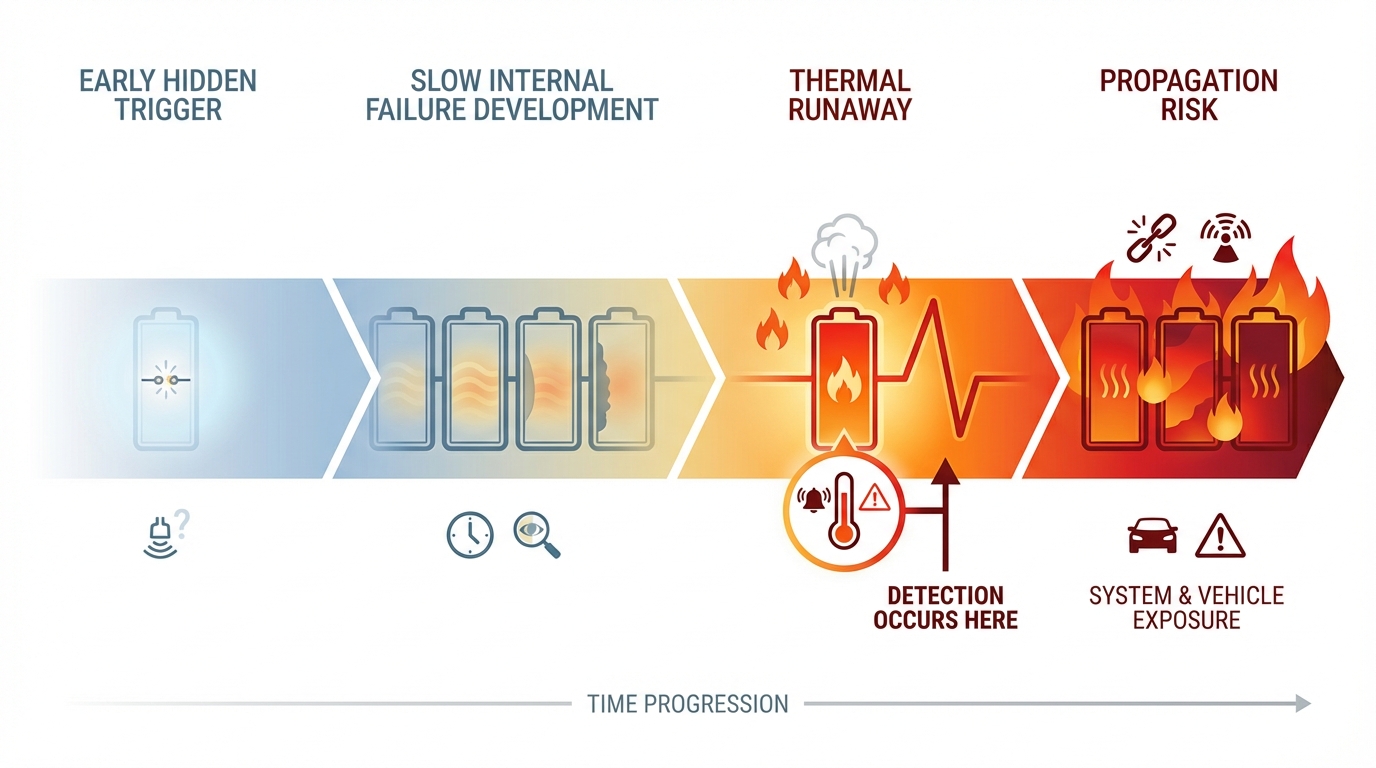
A more accurate chain looks like this:
Earlier trigger: A defect leaves the factory, or a pack takes an impact, or stress accumulates over time.
Slow failure development: A micro-short forms, heat builds locally, and the change is too small to stand out at pack level.
Thermal runaway: Once the cell chemistry runs away, the BMS can alert and isolate, but it can’t reverse the reaction.
Propagation risk: Whether it stays contained or spreads depends on pack design, barriers, venting, and spacing.
That’s why a vehicle can be parked, not charging, and still end up in a serious event.
EU/UK reality check: recalls are often about what’s hard to detect
If you look at EU/UK incidents and recalls, a consistent theme shows up: manufacturers sometimes respond with software updates and charge caps, even when there’s no single “user error” to point to.
Examples that fleets will recognize:
Hyundai Kona EV battery replacements tied to cell manufacturing issues
Ford Kuga PHEV recalls linked to battery defects
Jaguar I-Pace updates and charge limitations after multiple fires, including parked or non-collision cases
These actions don’t mean “BMS doesn’t matter.” They show where monitoring-based safety needs reinforcement.
What this means for fleets (without a checklist)
A few practical implications are worth holding onto:
Battery safety is a system property. Vehicles, parking density, depot layout, and adjacent assets all change impact severity.
“Fire rate” is only part of the story. Fleets care about tail risk: asset loss, building loss, downtime, and insurance exposure.
Battery safety intelligence matters. The best conversations with OEMs and suppliers focus on detection limits, thermal runaway management, and propagation control, not just range and cost.
If you want one takeaway to share internally, it’s this: The BMS reduces risk. It can’t eliminate every pathway to thermal runaway, especially when the failure starts inside a single cell. That’s not a reason to fear EVs. It’s a reason to manage them like the complex systems they are.