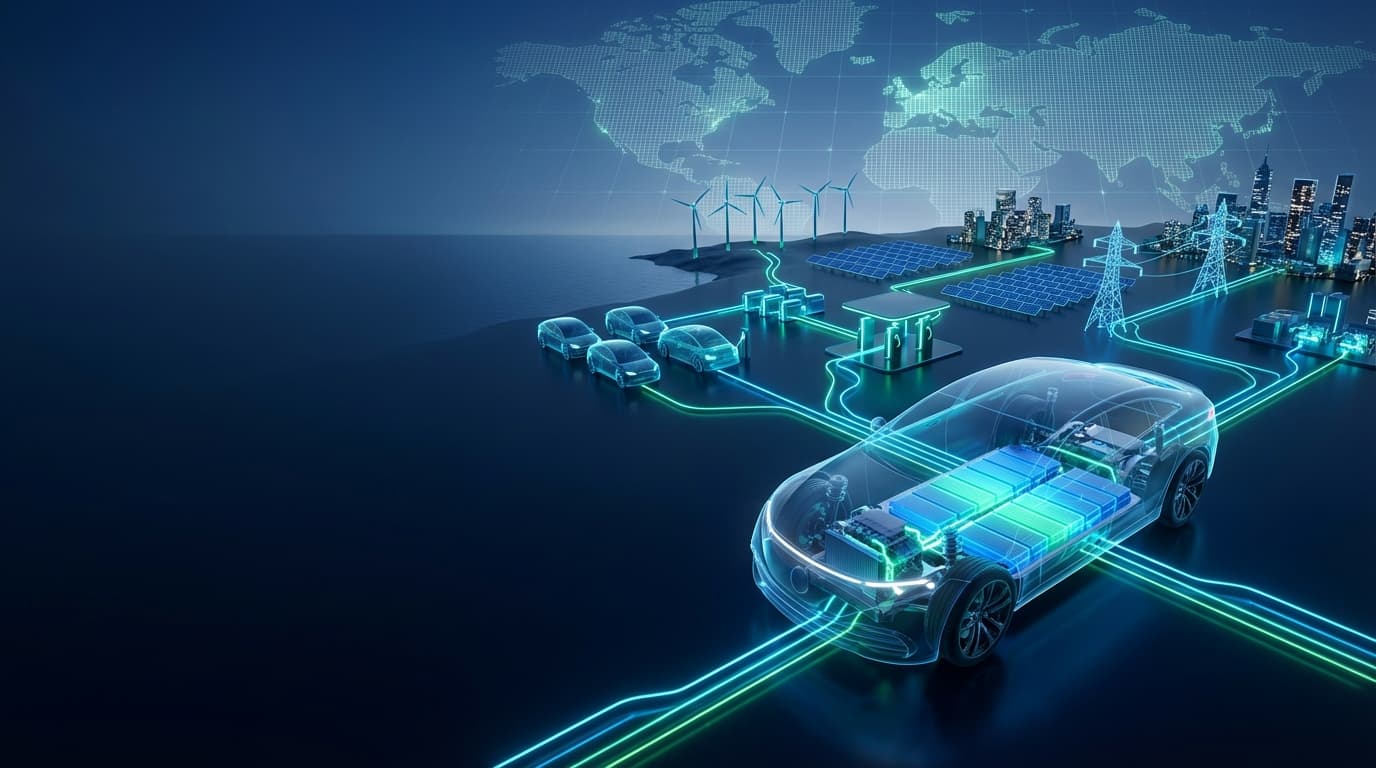
Electrification is not simply a technology shift. It is an energy transformation. Mobility has always been about energy: how we generate it, store it, move it, and convert it into motion. Today, that system is being rebuilt. And batteries are at the center of that reconstruction.
According to the International Energy Agency (IEA) – Global EV Outlook, electric vehicle sales continue to break records year after year, with battery-electric vehicles representing the dominant share of growth in global EV markets.
The shift is no longer experimental. It is structural.
Efficiency Determines Direction
The future of mobility is not decided by preference. It is decided by efficiency. Battery-electric drivetrains convert a significantly higher share of electrical energy into motion compared to combustion engines. Well-to-wheel analyses published by institutions such as the Fraunhofer Institute for Systems and Innovation Research (ISI) consistently show the efficiency advantage of direct electrification over fossil-based alternatives.
Hydrogen fuel cell systems, while promising in certain heavy-duty applications, require multiple energy conversion steps — from electricity to hydrogen production, compression, transport, and reconversion — each introducing losses. This efficiency gap has also been acknowledged in strategic assessments by major manufacturers including Volkswagen AG.
In a renewable energy system, efficiency defines scalability. The more energy lost in conversion, the more infrastructure must be built to compensate. Efficiency is infrastructure strategy.
Electrification Aligns with Renewable Systems
Modern energy systems are becoming:
Decentralized
Digital
Renewable
Data-driven
Battery-electric mobility integrates naturally into this architecture. Reports from the International Renewable Energy Agency (IRENA) emphasize that electrification and renewable energy deployment reinforce each other structurally. As grids decarbonize, electric mobility becomes progressively cleaner. Unlike combustion vehicles, which remain tied to fossil fuel inputs, battery-electric vehicles improve as the electricity mix improves. This creates a structural asymmetry.
Beyond the Production Debate
Battery production carries an environmental footprint, particularly linked to raw material extraction and cell manufacturing. However, lifecycle analyses continue to show that battery-electric vehicles achieve climate benefits over combustion vehicles within operational lifetimes, particularly as electricity systems decarbonize. Research institutions such as Fraunhofer ISI have repeatedly documented this transition dynamic.
In parallel, regulatory frameworks under the European Commission’s EU Battery Regulation (Regulation 2023/1542) are tightening requirements around carbon footprint disclosure, recycled content, and lifecycle transparency.
The direction is clear: production emissions are being addressed, while operational emissions continue to decline. Combustion engines do not offer that structural improvement pathway.
Market Reality
The global automotive industry is aligning accordingly. Manufacturers such asTesla and established OEMs across Europe, Asia, and North America are investing billions into dedicated electric platforms. According to the IEA Global EV Outlook, battery-electric vehicles account for the majority of new electric vehicle registrations globally. This is no longer a niche market. It is industrial transformation.
Scaling Changes the Conversation
As electrification expands into:
Urban bus fleets
Logistics depots
Charging hubs
Port infrastructure
Industrial battery storage
Energy density increases. Infrastructure concentration increases. System exposure increases. The question is no longer whether electric mobility works. It works. The question is how we manage energy concentration, lifecycle accountability, and systemic resilience at scale. Institutions such as the International Energy Agency and the European Commission increasingly emphasize that electrification must be accompanied by digitalization, monitoring, and governance mechanisms.
Energy drives mobility. But intelligence must guide energy. Battery-electric mobility aligns with:
Energy efficiency
Renewable integration
Decentralized infrastructure
Lifecycle transparency
Long-term decarbonization
Electrification is accelerating because it fits the architecture of the future. The responsibility now is to ensure that this scale-up is efficient, resilient, and intelligently governed. Energy drives mobility. Intelligence secures its future.